
Last Updated: September 2026
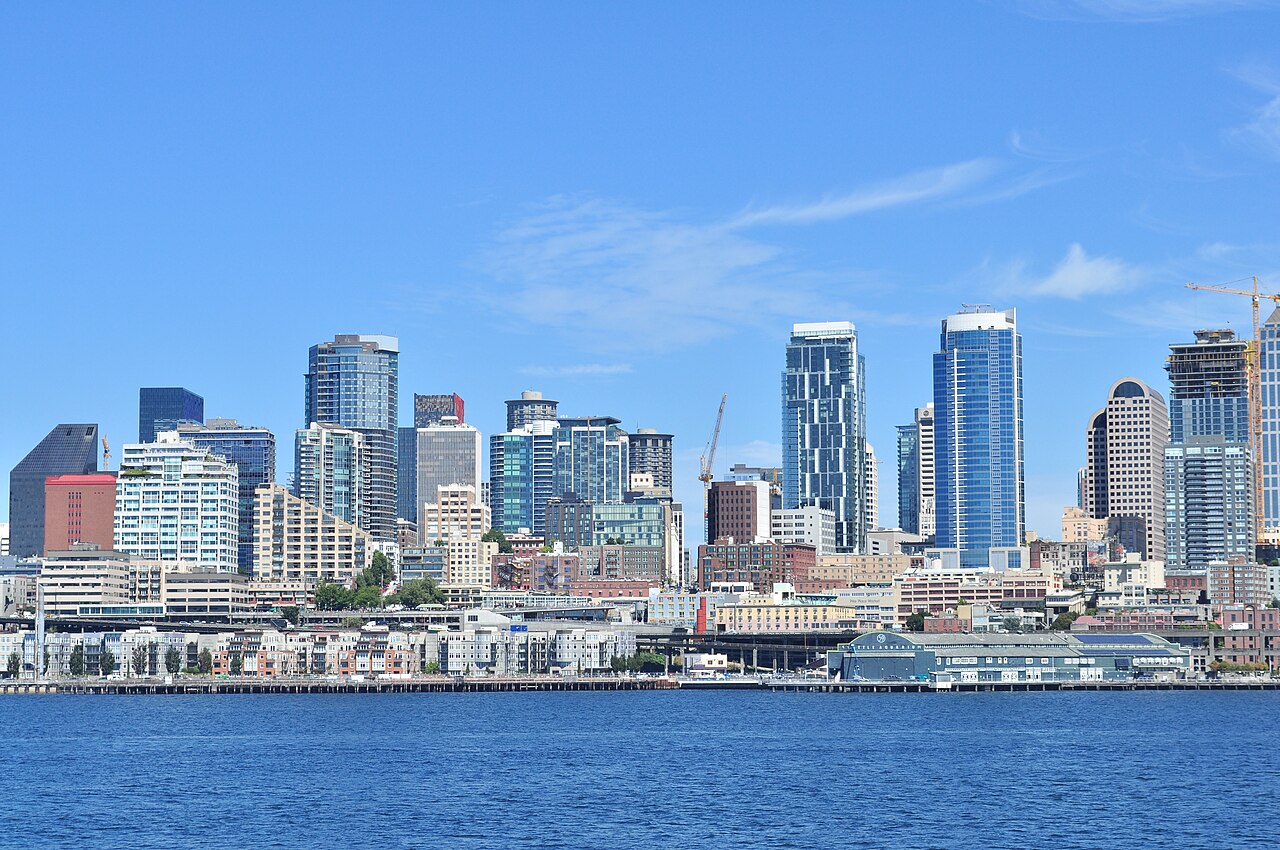
People searching for mushroom delivery Seattle are often looking for a convenient way to order online, but Psychedelics Zone serves Seattle through mushroom shipping, not a locally dispatched Seattle courier. Seattle itself is shaped by water, elevation and neighborhoods: Puget Sound and Elliott Bay define the west side, Lake Washington the east, and Lake Union cuts into the city between Downtown and the northern neighborhoods. From the tidal beaches and bluffs of Discovery Park to Pike Place Market, Seattle’s rebuilt central waterfront, Seattle Center and the neighborhoods surrounding Lake Union, the city repeatedly shifts between natural landscape and dense urban space.
Psychedelics Zone is an online dispensary where Seattle customers can compare current mushroom products and formats before placing an eligible order for shipment.
There is no Psychedelics Zone Seattle storefront, warehouse, pickup counter, locally stocked inventory or same-day Seattle courier represented by this page.
Explore the Psychedelics Zone Shop →
Review Current Shipping Information →
Mushroom Delivery Seattle Searches: What Psychedelics Zone Actually Provides
Mushroom delivery Seattle describes a type of local shopping search.
Psychedelics Zone’s actual fulfillment method is shipping.
That distinction matters.
A Seattle visitor can browse the current online catalog, compare formats, review current shipping terms and place an eligible order for shipment to a valid address.
This page does not represent:
- a Seattle mushroom storefront;
- a local Seattle warehouse;
- local pickup;
- Seattle-based inventory;
- an on-demand courier;
- same-day Seattle delivery.
Review Current Shipping Information →
Shipping policies and fulfillment details can change, so the live shipping resource should remain the source of truth instead of hardcoding volatile operational promises into an evergreen Seattle page.
Seattle Starts at the Water
Seattle’s geography makes much more sense when you start with water.
Puget Sound lies west of the city.
Elliott Bay curves into central Seattle.
Lake Washington forms much of the eastern side.
Lake Union occupies a central position north of Downtown.
The result is a city divided and connected by shorelines, hills, bridges and narrow stretches of land.
That geography also explains why neighborhoods only a few miles apart can feel dramatically different.
Magnolia looks toward Puget Sound and Elliott Bay.
Downtown drops toward the central waterfront.
Fremont and Wallingford sit around Lake Union.
West Seattle projects toward Elliott Bay and Puget Sound.
Rainier Valley runs southeast toward Lake Washington.
Seattle is not simply a Downtown surrounded by neighborhoods.
Water repeatedly interrupts and reorganizes the city.
Discovery Park Shows Seattle Before the Skyline
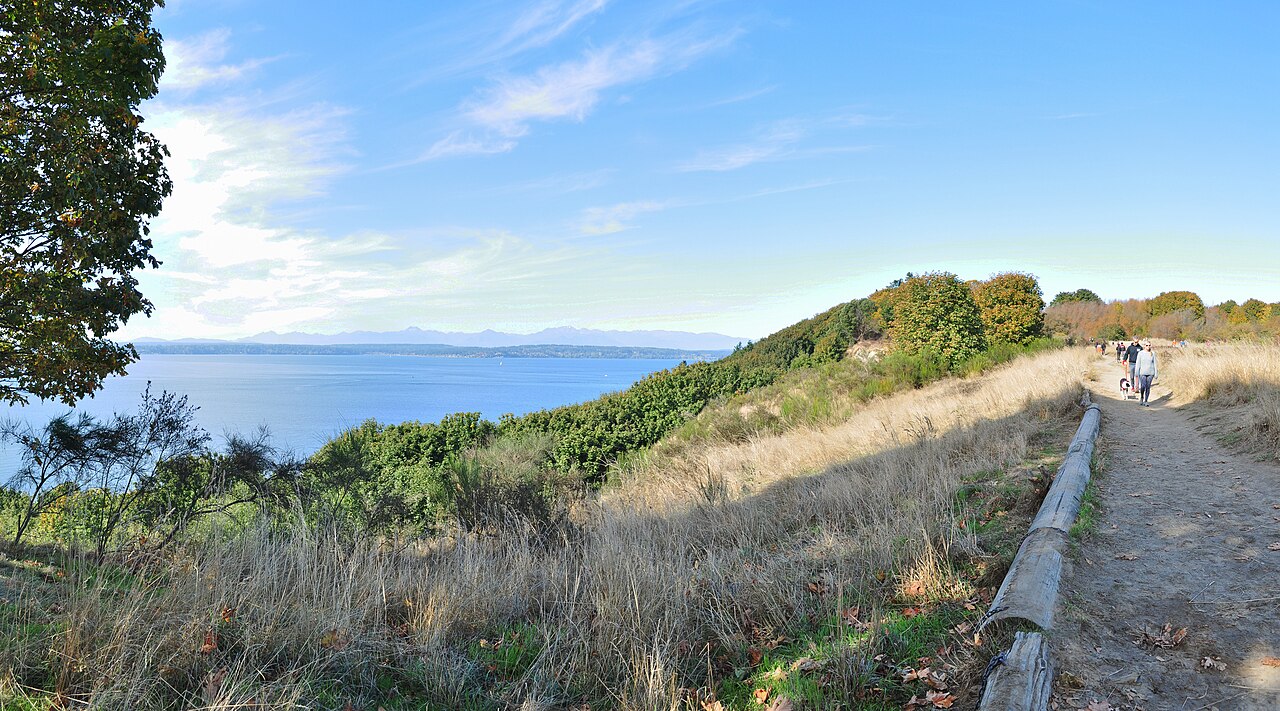
On Magnolia Bluff, Discovery Park provides one of Seattle’s strongest contrasts with Downtown.
Seattle Parks describes Discovery Park as the city’s largest park and a natural area containing forests, meadows, dramatic bluffs, streams and two miles of protected tidal beaches overlooking Puget Sound. The park also offers views toward both the Olympic and Cascade mountain ranges.
This is not wilderness hours outside Seattle.
It is inside the city.
That relationship makes Discovery Park valuable to the page because Seattle’s natural identity is not just a distant mountain backdrop. Saltwater shoreline, forest and bluff terrain remain part of the municipal landscape.
Discovery Park Also Carries a Deeper Seattle Story
Discovery Park occupies much of the former Fort Lawton site.
The City’s historical record also documents the Indigenous history of West Point and the 1970 occupation of Fort Lawton led by Native activists. Negotiations ultimately resulted in land being made available for what became the Daybreak Star Indian Cultural Center.
That history makes Discovery Park more than a scenic stop.
It connects contemporary parkland, military history and Seattle’s Coast Salish and urban Indigenous history.
Outdoor places are included to explain Seattle—not to suggest using intoxicating products before hiking, cycling, swimming, boating, driving or another activity requiring alertness or coordination.
Elliott Bay Pulls Seattle Toward Downtown
Travel southeast from Magnolia and the landscape becomes increasingly urban around Elliott Bay.
The waterfront is where Seattle’s geography and Downtown finally meet.
For years, that relationship was interrupted by the Alaskan Way Viaduct.
Today’s waterfront tells a different story.
Seattle’s Waterfront Park now extends from the Pioneer Square and stadium area north toward Pier 62. The City describes it as a roughly 20-acre central waterfront park with gardens, public spaces, elevated views and programming along Elliott Bay.
This is one of the most important differences between an older Seattle page and a page written in 2026.
The central waterfront has changed.
Overlook Walk Reconnects Pike Place Market With Elliott Bay
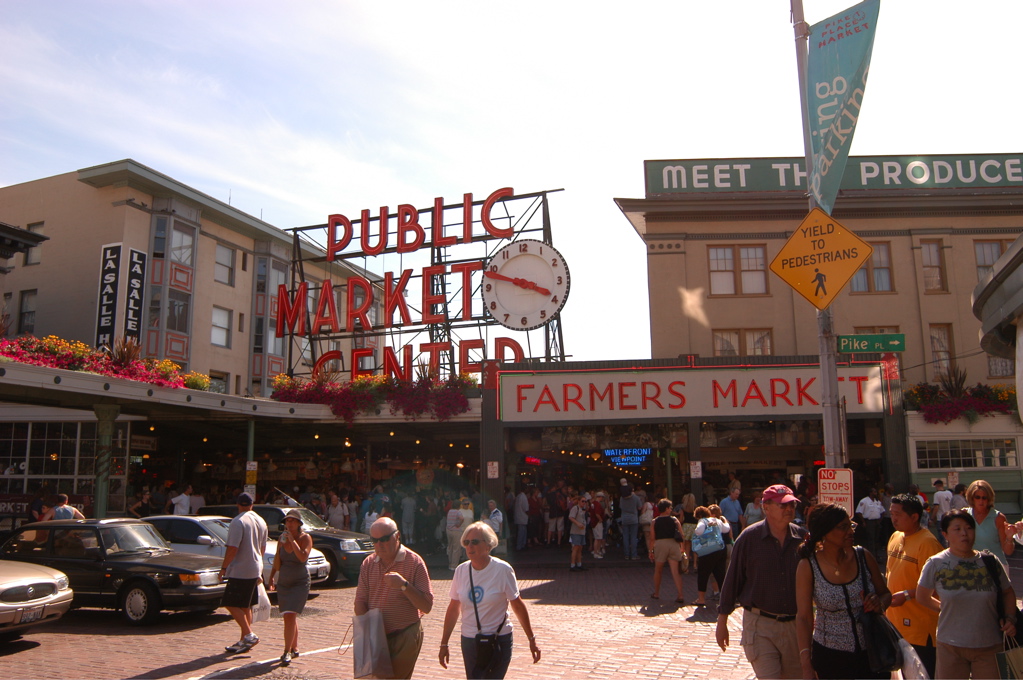
One feature explains the transformation particularly well.
Overlook Walk now creates a direct pedestrian connection between Pike Place Market and the waterfront.
The City says it spans roughly 100 feet of vertical elevation change and adds approximately 60,000 square feet of elevated park space where the Alaskan Way Viaduct once stood. Its viewpoints include Elliott Bay, Downtown, the Olympic Mountains, Mount Rainier and the stadium district.
That relationship deserves more attention than another generic paragraph about the Space Needle.
Seattle’s central city sits on a bluff.
Pike Place Market occupies the upper level.
Elliott Bay lies below.
Overlook Walk physically stitches those elevations together.
Market → elevated park → aquarium/waterfront → Elliott Bay.
That is a very current Seattle experience.
Pike Place Market Still Anchors the Bluff Above the Waterfront
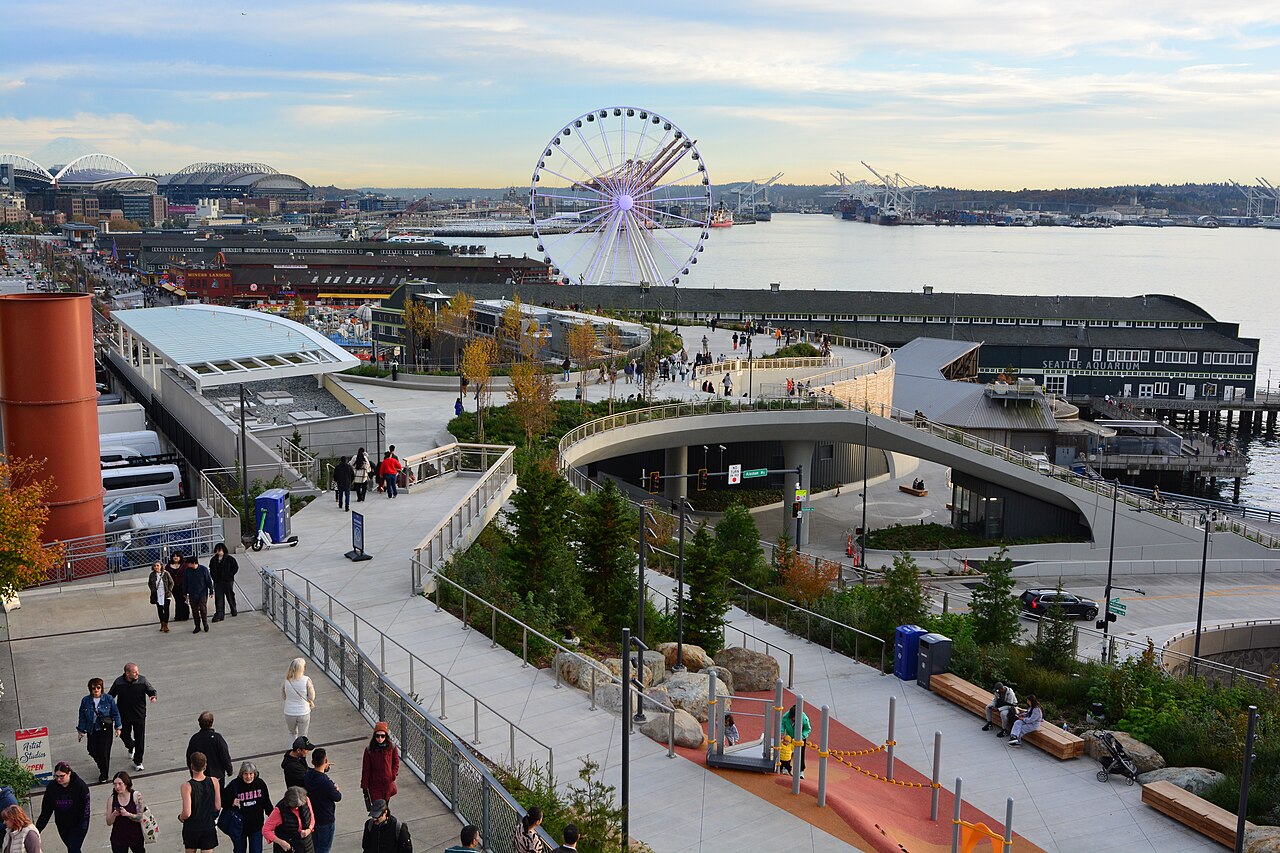
At the upper end of that connection is Pike Place Market.
The Market opened in 1907 after Seattle created a public farmers market where producers could sell directly to customers. The official Market history records that only a handful of farmers arrived on opening day and sold out by lunchtime.
Today, Pike Place occupies a nine-acre historic district in central Downtown and remains one of the oldest and largest continuously operating public markets in the United States.
Its location is as important as its history.
Pike Place was established on the hillside bluff close to the waterfront, where ships and ferries could bring goods into Seattle.
More than a century later, Overlook Walk has strengthened that original Market-to-water relationship in a new form.
Downtown Seattle Is a Layered Center, Not One District
Pike Place may be Seattle’s best-known Downtown institution, but Downtown itself changes block by block.
Belltown stretches north toward Seattle Center.
Pioneer Square anchors some of Seattle’s oldest urban streets farther south.
The Chinatown International District adds another distinct cultural and commercial center.
The Downtown Commercial Core sits between them.
South Lake Union extends the dense central city north toward Lake Union.
Seattle’s own neighborhood planning resources distinguish these areas rather than treating “Downtown” as a catch-all.
That distinction matters because Seattle’s central city works as a chain of connected districts.
Pioneer Square → Downtown → Pike Place/Belltown → Seattle Center → South Lake Union.
Seattle Center Turns World’s Fair History Into Everyday Civic Space
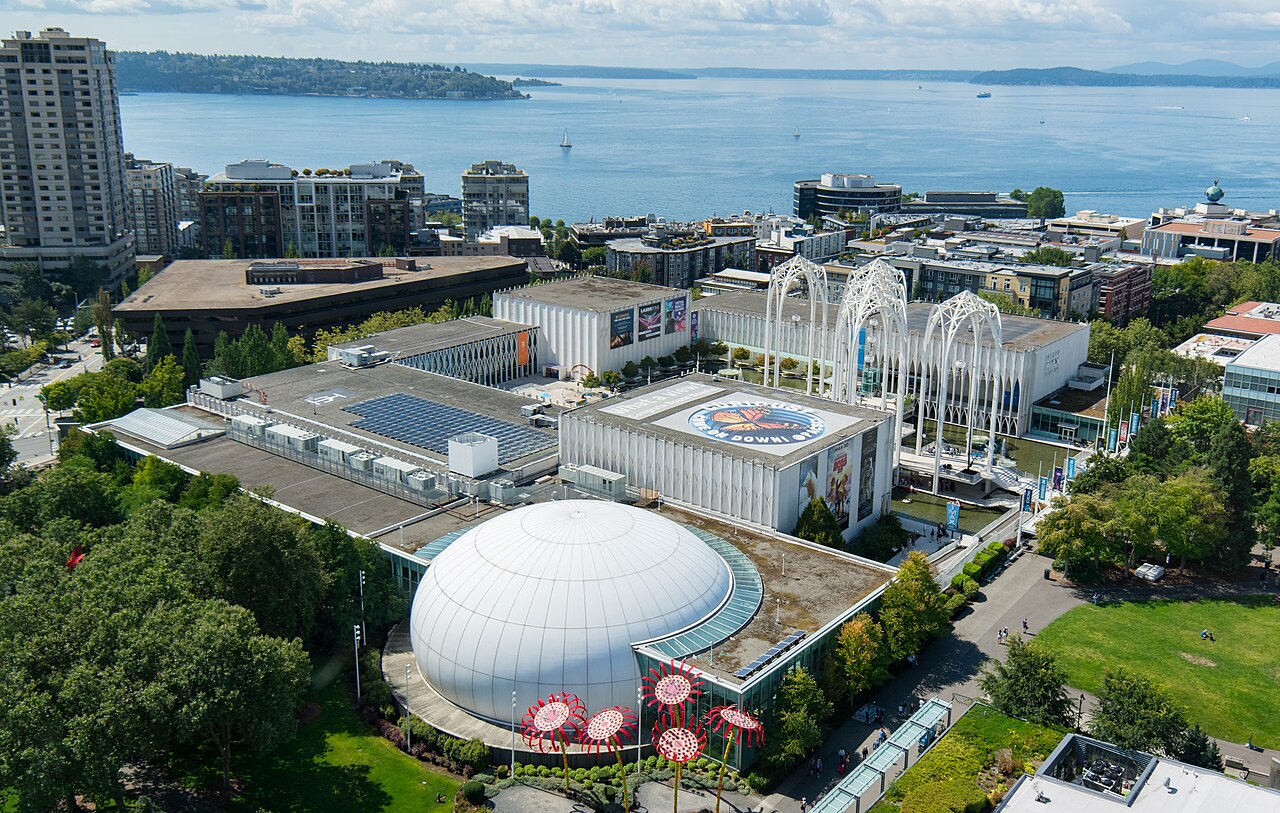
North of Belltown, Seattle Center represents another major layer of the city.
The 74-acre campus is a legacy of the 1962 Seattle World’s Fair and now contains more than 30 cultural, educational and entertainment organizations. Seattle Center reports thousands of events and programs across the campus each year.
The Space Needle is the obvious visual landmark.
But reducing Seattle Center to the Needle misses its local role.
The campus functions as a cultural and civic gathering space with museums, performing arts, sports, festivals, public art, fountains and seasonal programming.
That makes Seattle Center more useful to this page as a living district than as a landmark checklist.
Lake Union Changes the City Again
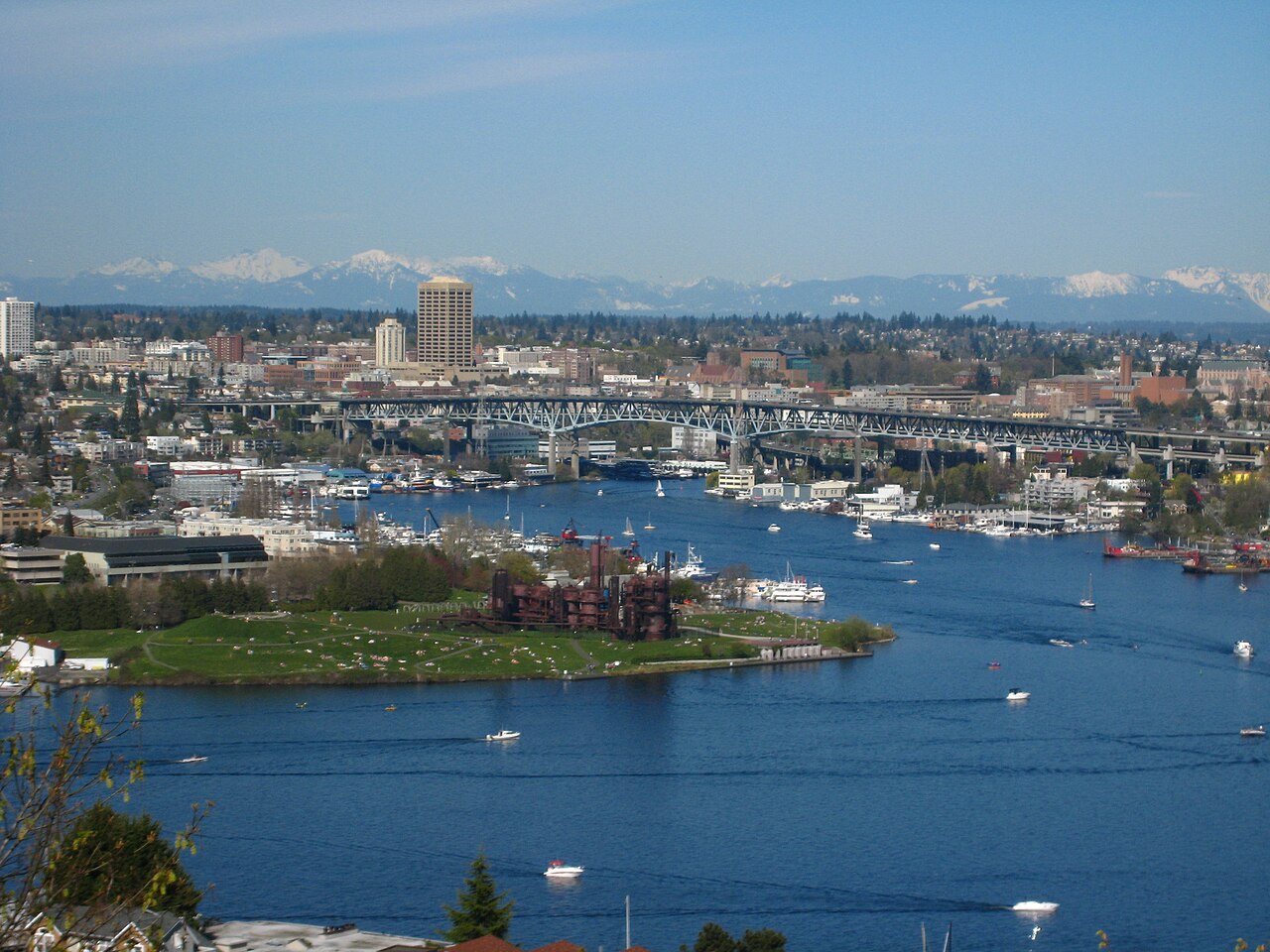
Continue north and Seattle encounters another major body of water.
Lake Union separates Downtown-adjacent development from neighborhoods such as Wallingford and Fremont while connecting through waterways toward Lake Washington and Puget Sound.
South Lake Union has developed into one of Seattle’s major employment and residential districts.
Across the water, Gas Works Park offers a completely different perspective.
The park preserves structures from a former coal-gasification plant that operated from 1906 to 1956. Those industrial structures remain one of the city’s most recognizable examples of adaptive reuse, although the fenced former plant structures themselves are not open for climbing or public access.
Gas Works therefore represents a particularly Seattle combination:
industrial history + lakefront park + Downtown skyline.
Seattle’s Neighborhoods Do Not Orbit One Main Street
Outside the central city, Seattle becomes increasingly neighborhood-driven.
The City’s current neighborhood resources distinguish areas including Ballard, Beacon Hill, Capitol Hill, Central Area, Columbia City, Fremont, Green Lake, Queen Anne, University District, Wallingford, Rainier Beach, West Seattle Junction and many others.
Several are especially useful for understanding Seattle.
Capitol Hill
Capitol Hill rises immediately east of Downtown and functions as one of Seattle’s densest residential, nightlife and cultural districts.
Its relationship to Downtown is geographic as much as cultural: the hill rises sharply east of I-5, creating a distinct urban center remarkably close to the central business district.
Ballard
Ballard sits northwest of Downtown near Salmon Bay.
Its waterfront and maritime setting create a different Seattle identity from Downtown or Capitol Hill.
Fremont and Wallingford
Fremont and Wallingford sit around the north side of Lake Union.
Their relationship to the lake and nearby bridges makes them part of the broader Lake Union story rather than generic northern neighborhoods.
West Seattle
West Seattle occupies the land across Elliott Bay from Downtown.
Alki and other West Seattle areas can offer a completely different orientation toward Puget Sound and the central skyline.
Rainier Valley
Rainier Valley extends southeast through some of Seattle’s most culturally diverse neighborhoods and provides another important counterweight to an overly Downtown-centric Seattle page.
These relationships matter more than producing a giant neighborhood-name list.
Seattle Transit Follows the City’s Long North-South Shape
Seattle’s geography encourages movement along a long north-south corridor.
Downtown remains a major transit center, while Link light rail connects central Seattle with destinations north and south of the core.
Local bus networks connect neighborhoods that rail does not directly serve.
For an evergreen city page, exact schedules should remain on current transit resources rather than being frozen into the copy.
Seattle’s topography also explains why transit matters.
Water, steep hills and limited crossing points can make two places that look close on a map functionally farther apart.
That is another reason neighborhood relationships deserve more explanation here than simple mileage.
Plan current Seattle transit trips →
What’s Happening in Seattle? Events Move Between Waterfront, Seattle Center and the Lakes
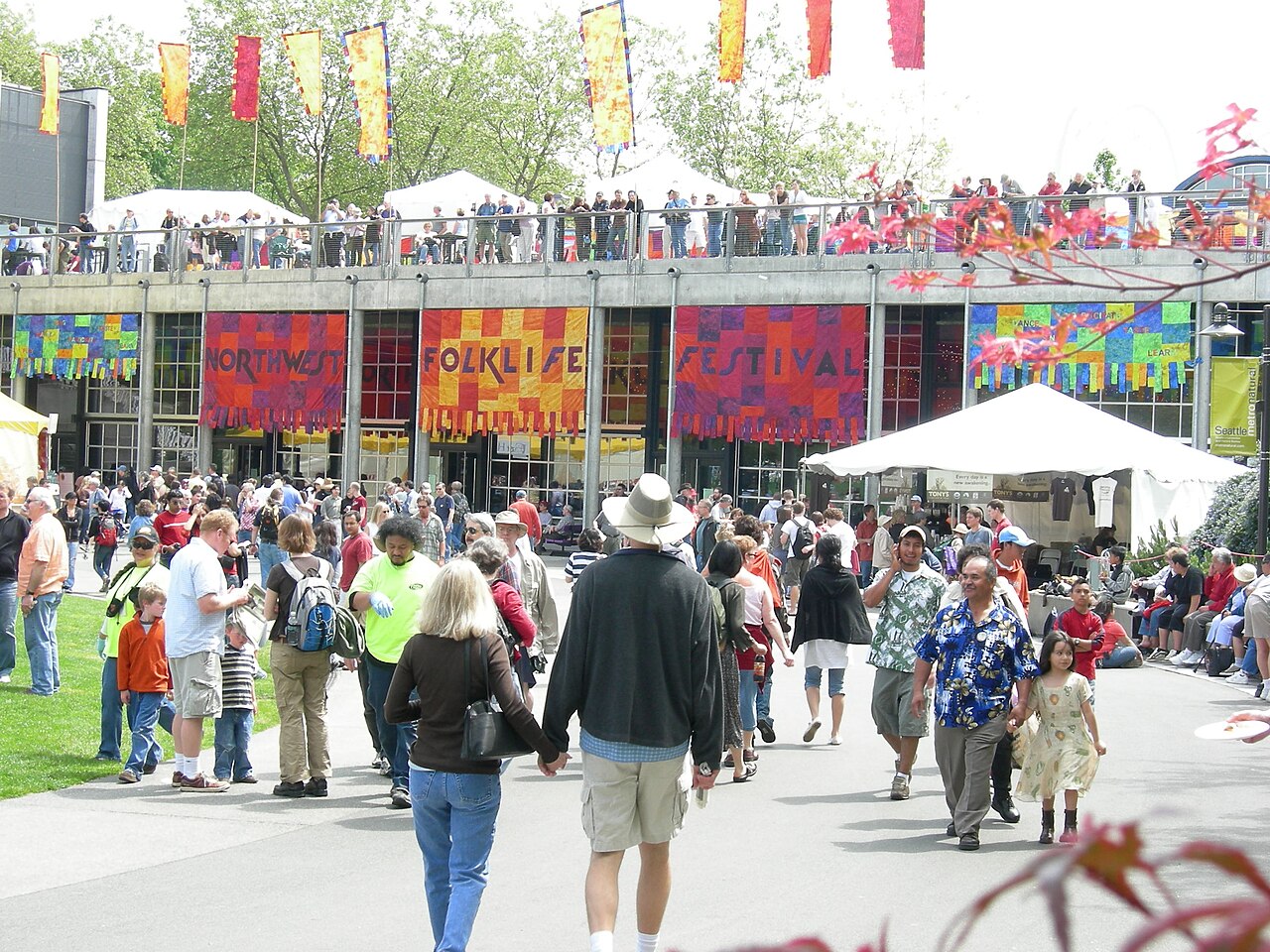
Seattle’s recurring events reveal the city’s geography almost as clearly as its parks.
Seafair Uses Seattle’s Water
Seafair is a summer event series rather than one isolated festival.
The current organization describes its 2026 programming as including the Torchlight Parade, waterfront events and the Boeing Seafair Air Show and hydroplane races on Lake Washington.
The 2026 season even began with a Summer Kickoff at Pier 62 on Seattle’s renovated waterfront.
That distribution makes Seafair a useful Seattle event story:
waterfront → streets → Lake Washington.
Bumbershoot Belongs to Seattle Center
Bumbershoot returned to Seattle Center for Labor Day weekend in 2026 with music, visual art, film, fashion, comedy and other programming.
The festival’s official site describes more than five decades of Bumbershoot history at Seattle Center.
Exact dates change each year, so future readers should use the live festival calendar.
Seattle Center Festál Runs Across Much of the Year
Seattle Center’s Festál series is an especially strong evergreen resource.
Established in 1997, the program has expanded to 25 cultural heritage festivals, with the 2026 season running from February through November.
That gives Seattle a recurring cultural-events story extending far beyond one festival weekend.
Northwest Folklife Opens the Summer Season
Seattle Center’s 2026 summer calendar included Northwest Folklife over Memorial Day weekend, followed by a broad season of concerts, cultural festivals, public programming and outdoor events.
Movies at the Mural Turns the Space Needle Into a Backdrop
Seattle Center also runs its recurring summer Movies at the Mural series.
The outdoor screenings use a 40-foot screen at the Mural Amphitheatre with the Space Needle rising behind the audience.
That is a good example of an event that actually explains a place instead of merely adding an event keyword.
Seattle, Bellevue, Shoreline and Burien Are Different Cities
Seattle is the regional center, but the surrounding urban area crosses many municipal boundaries.
Bellevue is a separate city east of Lake Washington.
Shoreline is a separate city immediately north of Seattle.
Burien is separate south of Seattle.
Tukwila is separate southeast of Seattle.
Mercer Island is a separate city on the island in Lake Washington.
Renton is separate southeast of Seattle.
Within Seattle, places such as Ballard, Capitol Hill, Fremont, Magnolia, Queen Anne, Beacon Hill, Rainier Valley, West Seattle and the University District belong to the Seattle story.
Keeping those distinctions accurate is more useful for readers and local SEO than expanding Seattle’s relevance by labeling nearby cities as neighborhoods.
Receiving Mushroom Shipping at Seattle Homes, Apartments and Condos
Seattle has almost every residential receiving environment imaginable.
Downtown and Belltown contain apartment and condominium towers.
South Lake Union has large managed residential buildings.
Capitol Hill mixes apartments, condominiums and smaller multifamily properties.
Ballard includes newer apartment developments alongside older residential streets.
West Seattle and Magnolia include larger concentrations of detached homes as well as multifamily buildings.
University District housing may involve apartments, student-oriented properties or university-controlled receiving systems.
A Seattle parcel may therefore be routed through:
- a front porch;
- a shared mailroom;
- a parcel locker;
- a concierge;
- a leasing office;
- a building reception desk;
- a property manager;
- another property-designated receiving area.
Use the complete address and unit number and understand the building’s package procedures before ordering.
Discreet packaging is different from guaranteed private receipt.
Psychedelics Zone may control its exterior packaging, but it does not control USPS, UPS, apartment staff, mailrooms, university systems, property managers or other third-party receiving environments.
Review Current Shipping Information →
Compare Mushroom Gummies, Chocolates, Capsules and Other Formats
People searching for magic mushrooms Seattle, mushroom gummies Seattle, mushroom chocolates Seattle, mushroom chocolate bars Seattle or shroom bars Seattle may be using those phrases broadly.
A search term does not determine what’s inside an individual product.
The live Psychedelics Zone Shop and individual product pages should remain the source of truth for current formats, ingredients, formulations and availability.
Compare Current Mushroom Products →
Mushroom Gummies
Gummies provide a flavored edible format.
Individual formulations can differ, so shoppers should check the current product listing rather than assuming all mushroom gummies contain the same ingredients.
Mushroom Chocolates and Chocolate Bars
Mushroom chocolates and mushroom chocolate bars deserve useful coverage because chocolate terminology is a significant part of the uploaded keyword dataset.
That search opportunity does not mean every mushroom chocolate is a psilocybin product.
Mushroom Capsules
Capsules offer another format for shoppers who prefer something other than gummies or chocolate.
Drink Mixes and Other Current Formats
Additional formats may be available through the current catalog.
Because inventory and category structure can change, the Shop should remain the primary source for formats whose live category URL has not been confirmed.
Compare Current Product Formats →
How Do You Evaluate Mushroom Products Before Ordering?
Product format is only part of comparison.
The Psychedelics Zone article How to Select Quality Mushrooms for Safe Use discusses product labeling, packaging, visual quality indicators, testing documentation and other product-evaluation considerations.
How to Select Quality Mushrooms for Safe Use →
Use that article as educational background.
Then use the current individual product listing to confirm the exact ingredients, formulation, serving information and availability of the product you are actually considering.
Explore Current Psychedelics Zone Brands
Brand inventory changes.
Rather than duplicating a brand roster on the Seattle page, use the Psychedelics Zone Brands directory as the current source of truth.
Explore Psychedelics Zone Brands →
That approach follows the new Master Guide’s requirement to keep changing brand information centralized.
Frequently Asked Questions
Does Psychedelics Zone offer mushroom delivery in Seattle?
Psychedelics Zone serves Seattle through online shipping rather than a locally dispatched Seattle courier. Mushroom delivery Seattle is targeted because it reflects search intent, but this page does not claim same-day or local-courier service.
Does Psychedelics Zone ship mushroom products to Seattle?
Eligible orders may be shipped to valid Seattle addresses according to current Psychedelics Zone shipping policies. Review the live shipping resource before ordering because fulfillment terms can change.
Review Current Shipping Information →
Is mushroom shipping to Seattle discreet?
Psychedelics Zone’s current packaging information should be checked before publication and ordering. Even where exterior packaging is discreet, that does not guarantee private receipt after a carrier, concierge, apartment mailroom or another third party handles a parcel.
Is Discovery Park really inside Seattle?
Yes. Discovery Park is in Seattle’s Magnolia area and is Seattle’s largest park, with forests, bluffs, meadows and approximately two miles of protected tidal beach.
Can you walk directly from Pike Place Market to Seattle’s waterfront now?
Yes. Overlook Walk creates a pedestrian connection from Pike Place Market to the waterfront while handling roughly 100 feet of elevation change between the two levels.
Why is Seattle’s new waterfront significant?
The current Waterfront Park is a roughly 20-acre public-space system along Elliott Bay, and Overlook Walk occupies an area where the Alaskan Way Viaduct once separated Downtown from the waterfront.
Is Bellevue a Seattle neighborhood?
No. Bellevue is a separate incorporated city east of Seattle across Lake Washington. Ballard, Capitol Hill, Fremont, Magnolia, Queen Anne and West Seattle are examples of places within Seattle.
What recurring Seattle events are worth checking?
Seafair, Bumbershoot, Northwest Folklife and Seattle Center’s Festál series are useful starting points. Exact schedules change, so use the organizers’ current calendars before planning around an event.
From Puget Sound to the Market to the Lakes
Seattle makes the most sense when you follow its water and elevation.
Begin on Magnolia Bluff.
Walk through forest and meadow until Discovery Park drops toward the tidal edge of Puget Sound.
Follow Elliott Bay toward Downtown.
The skyline grows denser.
Reach the central waterfront and climb Overlook Walk, where Seattle has transformed the former viaduct corridor into a new connection between Elliott Bay and Pike Place Market.
Continue through Downtown toward Seattle Center.
Then move north again and another shoreline appears at Lake Union.
Across the water, the industrial remains at Gas Works Park face back toward the modern skyline.
Beyond them, Seattle divides again into Ballard, Fremont, Wallingford, the University District and dozens of other neighborhood centers.
Bluff. Sound. Bay. Market. Waterfront. Downtown. Seattle Center. Lake. Neighborhoods.
That is Seattle.
When you’re ready to compare products, Psychedelics Zone lets Seattle customers browse current mushroom gummies, mushroom chocolates and chocolate bars, capsules and other available formats online before reviewing shipping information and placing an eligible order.
Explore Psychedelics Zone Brands →
Responsible Purchasing
Review current Psychedelics Zone purchasing and shipping requirements before ordering.
Customers are responsible for understanding the laws and policies that apply to their purchase and destination.
Use the live individual product page to verify ingredients, formulation, serving information and current availability.
Do not assume a product contains psilocybin because a visitor arrived through a search such as psilocybin Seattle, magic mushrooms Seattle or shroom bars Seattle.
Do not drive, cycle, boat, swim, hike in hazardous conditions or participate in another activity requiring alertness, balance, coordination or judgment while impaired.
Product and educational content should not be treated as medical advice.
ZIP Codes Serving Seattle
Seattle and postal ZIP boundaries do not align perfectly. King County’s current Seattle service-area information identifies these ZIP codes as Seattle service areas, with explicit warnings that some boundary ZIPs extend outside the city:
98101, 98102, 98103, 98104, 98106, 98107, 98108, 98109, 98112, 98116, 98117, 98118, 98119, 98121, 98122, 98125, 98126, 98133, 98134, 98136, 98144, 98155, 98177, 98178, 98199.
A separate City of Seattle source identifies the core residential Seattle ZIP set as 98101, 98102, 98103, 98104, 98105, 98106, 98107, 98108, 98109, 98112, 98115, 98116, 98117, 98118, 98119, 98121, 98122, 98125, 98126, 98133, 98134, 98136, 98144, 98177, 98178 and 98199.