
Did you know that over 60 percent of mushroom supplements sold online fail basic quality checks? Choosing top-tier mushrooms is not just about taste or trend. The right selection can affect your wellness and safety. This guide shares practical ways to spot high quality mushrooms by focusing on clean preparation, clear labeling, and trustworthy sources, so you can shop with confidence and avoid common pitfalls.
Quick Summary
| Key Point | Explanation |
|---|---|
| 1. Maintain a Clean Workspace | Sanitize surfaces and tools with isopropyl alcohol to avoid contamination during mushroom inspection. |
| 2. Examine Visual Quality Indicators | Look for uniform color and firm texture; reject mushrooms with mold, bruising, or unusual spots. |
| 3. Verify Lab Testing Credentials | Check for a Certificate of Analysis and ensure it comes from an accredited lab to confirm safety and potency. |
| 4. Understand Extraction Methods | Favor fruiting body extracts and dual extraction for higher potency and beneficial compound concentration. |
| 5. Ensure Secure Packaging and Delivery | Choose products with tamper-proof packaging and clear labeling to maintain quality and protect your privacy. |
Table of Contents
- Step 1: Prepare Your Space And Tools
- Step 2: Assess Visual And Physical Qualities
- Step 3: Verify Lab-Tested And Authentic Sources
- Step 4: Compare Potency And Product Types
- Step 5: Confirm Packaging And Discreet Delivery
Step 1: Prepare Your Space and Tools
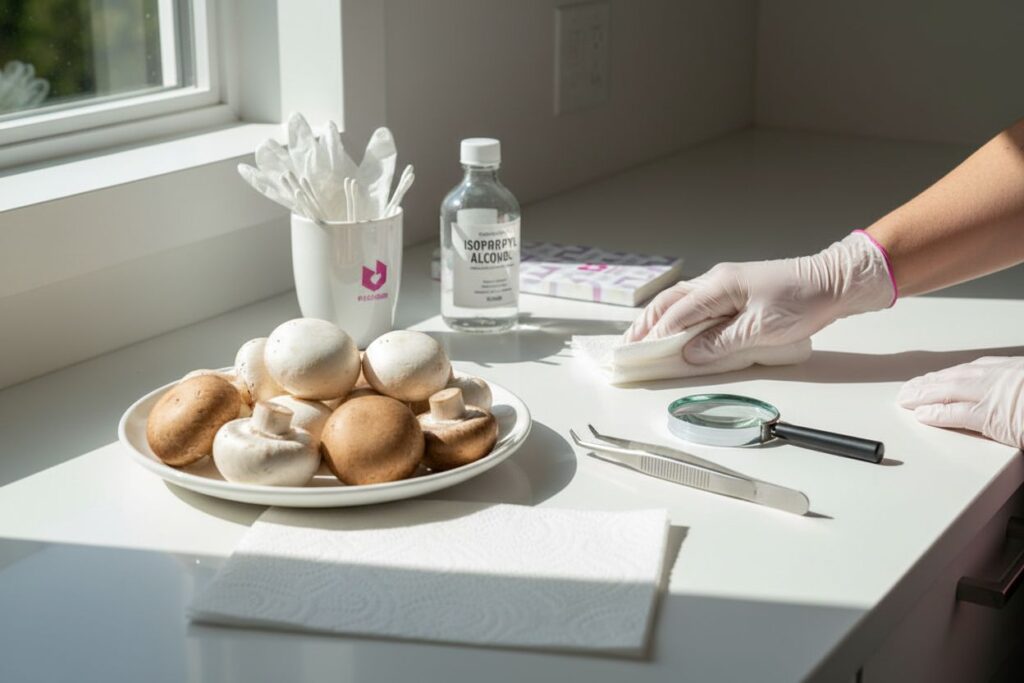
Selecting quality mushrooms requires a thoughtful approach starting with creating a clean, organized environment. Think of your preparation space like a mini laboratory where precision and cleanliness matter most.
First, gather essential tools that will help you evaluate mushroom quality safely. You will want clean surfaces like a white ceramic plate or glass cutting board, bright lighting (natural daylight works best), clean tweezers or tongs, disposable gloves, and a magnifying glass if possible. According to standards from Certified Naturally Grown, sanitizing your workspace is crucial.
Wipe down your entire work surface with 70% isopropyl alcohol to eliminate potential contaminants. This step removes microbes and creates a sterile environment for careful mushroom inspection. Place a clean white towel or paper underneath to provide high contrast for examining mushroom details.
Pro Tip: Always wash your hands thoroughly and wear disposable gloves to prevent transferring oils or bacteria during mushroom handling.
Organize your space with good lighting near a window or under a bright lamp. Natural daylight helps you spot subtle color variations, bruising, or unusual textures that might indicate mushroom quality or potential issues.
As recommended by Very Well Health, consulting health professionals and understanding product safety guidelines is essential. Your careful preparation sets the stage for selecting mushrooms that meet high standards of quality and safety.
You are now ready to move on to the detailed visual inspection of your potential mushroom selection.
Step 2: Assess Visual and Physical Qualities
Now that your workspace is prepared, you are ready to dive into the critical process of visually and physically evaluating mushroom quality. Your eyes and careful observation are your most powerful tools in this assessment.
Start by examining the overall appearance of the mushrooms. According to Fungi Review, you want to look for specific visual indicators that signal potential quality or potential problems.
Check the color first. High quality mushrooms typically have consistent coloration without significant discoloration or unusual dark spots. Healthy mushrooms should appear vibrant and rich in their natural tone. Look for uniform color across the entire specimen without blotchy or irregular patches that might suggest degradation or contamination.
Next, focus on texture. Gently touch the mushroom surface (while wearing gloves). Quality mushrooms should feel firm with a smooth or slightly fibrous texture depending on the specific species. Avoid mushrooms that feel overly soft, slimy, or have an unusual dampness that could indicate bacterial growth.
Pro Tip: Reject any mushrooms with visible mold, excessive bruising, or unusual fuzzy growths on their surface.
Pay close attention to the labeling and packaging. Fungi Review recommends carefully examining documentation that specifies species, extraction method, and processing details. Trustworthy producers provide clear information about their mushroom origins and preparation techniques.
Look for signs of transparency such as detailed origin information, specific strain names, and evidence of laboratory testing. Vague or overly generic packaging can be a red flag indicating potential quality issues.
You are now prepared to move forward with a more detailed tactile and sensory examination of your selected mushrooms.
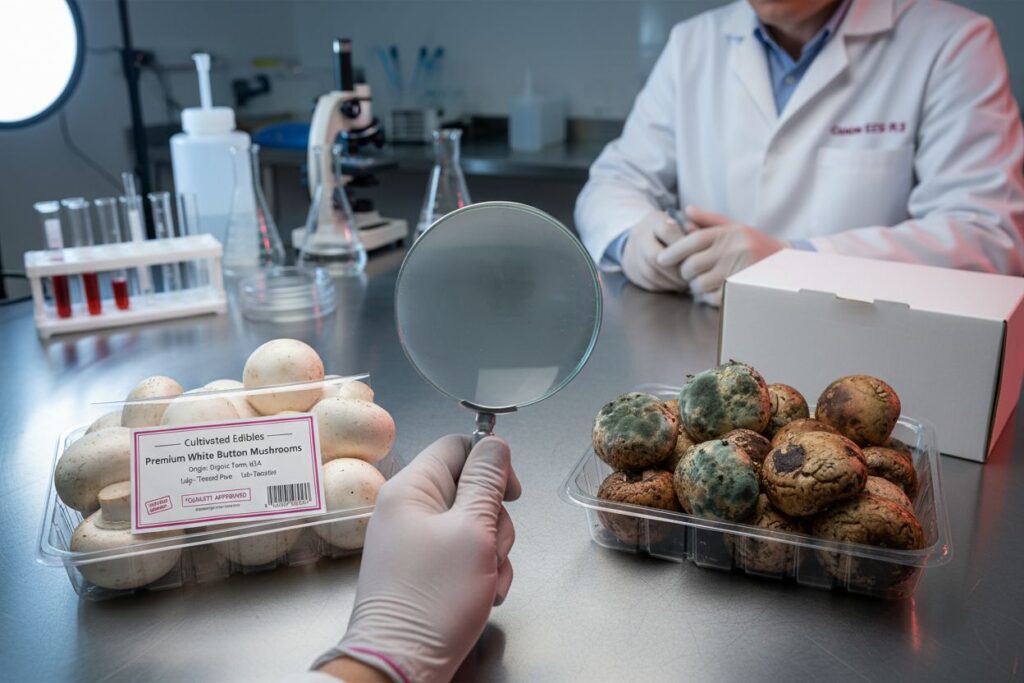
Here’s a summary of visual and physical mushroom quality indicators:
| Quality Indicator | High Quality Signs | Warning Signs |
|---|---|---|
| Color | Uniform, vibrant, natural tone | Discoloration Dark/blotchy spots |
| Texture | Firm Smooth or fibrous | Slimy Overly soft Damp |
| Surface Appearance | Clean No visible mold | Mold Fuzz Excessive bruising |
| Packaging/Labeling | Clear species & origin Lab info | Generic labels No documentation |
Step 3: Verify Lab-Tested and Authentic Sources
Authenticity is your north star when selecting quality mushroom products. Learning how to verify lab testing and source credibility will protect you from subpar or potentially unsafe selections.
According to Fungi Review, the first step is locating and carefully examining the Certificate of Analysis (COA). This document reveals critical information about the mushroom product’s composition and safety profile.
Focus on key areas in the lab report. Look for comprehensive testing that covers active compound levels like beta glucans and specific markers unique to the mushroom species. Professional lab reports will include detailed measurements of key nutritional and bioactive components.
Check the laboratory credentials carefully. As recommended by Fungi Review, prioritize reports from ISO 17025 accredited laboratories. These certifications ensure rigorous testing standards and reliable analytical methods.
Pro Tip: Authentic lab reports will show testing for potential contaminants including heavy metals pesticides and microbial presence. If these details are missing consider it a red flag.
Pay special attention to the moisture content testing. Proper moisture levels indicate careful processing and storage conditions. Excessive moisture can promote bacterial growth and compromise mushroom quality.
Verify the report date to ensure you are looking at recent testing. Lab reports older than six months may not accurately represent the current product batch. Fresh documentation demonstrates ongoing quality commitment from the producer.
You are now equipped to confidently assess the scientific credibility of your mushroom source and make an informed selection.
Step 4: Compare Potency and Product Types
Selecting the right mushroom product requires understanding the nuanced differences in potency and extraction methods. Your goal is to find a product that delivers maximum therapeutic potential and quality.
According to Fungi Review, the first critical comparison is between extraction methods. Single extraction versus dual extraction can dramatically impact the bioactive compound concentration. Dual extraction typically provides a more comprehensive profile of beneficial compounds by using both water and alcohol processes.
Pay close attention to the source of your mushroom product. Fruiting body extracts are generally considered superior to mycelium grown on grain. Mycelium products often contain more filler material and less concentrated active ingredients. Professional sources recommend prioritizing fruiting body extracts for the most potent and pure mushroom supplements.
Fungi Review suggests checking specific concentration markers. Look for beta glucan levels between 20 to 30 percent as a quality indicator. Additional markers like triterpenes cordycepin and specific neurotrophic compounds can help you compare product potency across different mushroom types.
Pro Tip: Always verify the percentage of active compounds. Lower percentages might indicate diluted or less effective products.
Consider the specific type of mushroom and its intended use. Different mushroom species offer unique benefits from immune support to cognitive enhancement. Match the mushroom type to your specific wellness goals for the most targeted approach.
Read product labels carefully. Transparent manufacturers will provide detailed information about extraction methods percentage of active compounds and the specific part of the mushroom used in production.
You are now prepared to make an informed decision about selecting the most potent and appropriate mushroom product for your needs.
Step 5: Confirm Packaging and Discreet Delivery
The final stage of selecting quality mushrooms involves carefully evaluating packaging integrity and understanding delivery protocols that protect your privacy and product quality. Your goal is secure professional packaging that ensures product safety and discretion.
According to Very Well Health, start by examining packaging certifications. Look for clear third party seals indicating quality standards. Non GMO organic and professional certification markers demonstrate a commitment to rigorous product management.
Professional packaging should provide multiple layers of protection. Sealed containers with tamper evident features prevent contamination and preserve mushroom quality during transit. Opaque packaging protects sensitive products from light exposure which can degrade active compounds.
Fungi Review emphasizes the importance of transparent labeling. Clear ingredient listings and extraction method details signal a trustworthy producer. The packaging should communicate essential information without compromising discretion.
Pro Tip: Choose vendors offering plain unmarked shipping containers that protect your privacy while ensuring safe product transport.
Check for temperature sensitive indicators if applicable. Some mushroom products require specific storage conditions. Packaging that demonstrates careful handling shows the producer understands product preservation.
Consider delivery timeframes and shipping protocols. Reputable providers will offer tracking information and guaranteed delivery windows. Quick shipping minimizes product exposure to potentially damaging environmental conditions.
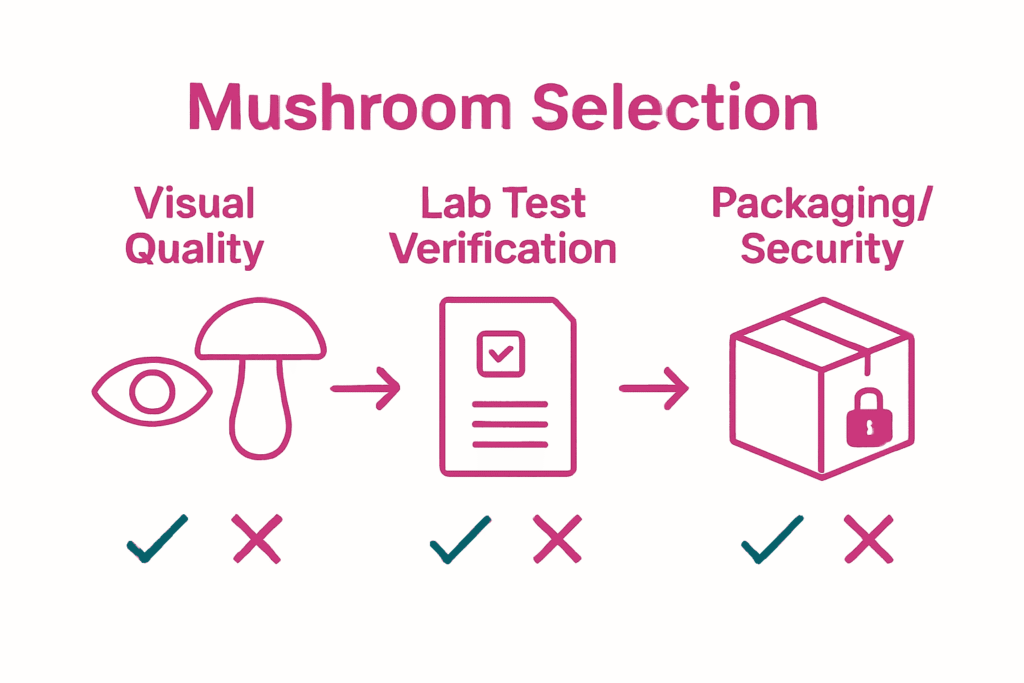
You have now completed a comprehensive process for selecting high quality mushroom products with confidence and discretion.
Ready for Safer, High-Quality Mushroom Experiences?
If you have ever worried about choosing safe or effective mushroom products, you are not alone. Learning how to spot real lab-tested sources and proper packaging can feel overwhelming, especially if you are new to the world of psilocybin. Let our curated Mushroom selections take away the guesswork. Each product is backed by the exact quality checkpoints described in this guide, from verified lab tests to trustworthy packaging and discreet, fast delivery.
Countless customers trust Psychedelics Zone for reliable service and peace of mind. Start exploring our wide range of premium options today. Experience the confidence that comes with buying from specialists who put your safety first. Want to learn about our shipping and privacy process? Visit the Delivery info archive for details. Do not wait any longer to step into your elevated journey—shop with us now.
Frequently Asked Questions
How do I prepare my space for selecting quality mushrooms?
To prepare your space for selecting quality mushrooms, clean your work surface with 70% isopropyl alcohol and gather essential tools such as clean tweezers, a magnifying glass, and disposable gloves. Organize your space with good lighting, preferably natural daylight, to help you observe subtle details.
What visual qualities should I look for in mushrooms?
While assessing mushrooms, focus on consistent color, firm texture, and a clean surface. Avoid any specimens that show discoloration, excessive bruising, or visible mold, as these are indicators of poor quality.
How can I verify the authenticity of mushroom products?
To verify authenticity, locate the Certificate of Analysis (COA) that comes with the mushroom product. Ensure the report includes comprehensive testing details, is recent, and comes from an accredited laboratory, which guarantees reliable quality standards.
What is the importance of extraction methods in mushroom quality?
Extraction methods significantly affect the potency of mushroom products. Prioritize dual extraction methods to ensure a comprehensive profile of beneficial compounds, as they typically yield higher concentrations of active ingredients compared to single extraction methods.
How should I evaluate the packaging of mushroom products?
When evaluating mushroom packaging, look for tamper-evident seals, clear ingredient listings, and protective measures against light exposure. Choose packaging that demonstrates multiple layers of protection to preserve the quality during transport.
What should I consider about delivery when selecting mushroom products?
Consider the security and discretion of the delivery. Choose vendors that offer plain packaging and provide tracking information to ensure that the product remains safe and arrives on time, minimizing exposure to potentially damaging conditions.