Last Updated: September 2026
Mushroom shipping in Berkeley serves a city that changes quickly from west to east. The San Francisco Bay opens beside the Berkeley Marina, former industrial West Berkeley gives way to commercial corridors, Shattuck Avenue forms the spine of Downtown, UC Berkeley rises immediately east of it, and residential streets continue uphill toward panoramic Bay views and Tilden Regional Park. Psychedelics Zone is an online dispensary where Berkeley customers can compare mushroom gummies, mushroom chocolates, capsules, drink mixes, and other current formats before placing an eligible order for shipment.
Berkeley covers roughly 19 square miles on the east side of San Francisco Bay and is strongly shaped—culturally, physically, and economically—by the University of California campus on its eastern side.
There is no Psychedelics Zone storefront, warehouse, pickup counter, or local courier operation in Berkeley associated with this page.
Explore the Psychedelics Zone Shop →
Review Current Shipping Information →

Mushroom Shipping in Berkeley: What to Know Before Ordering
Psychedelics Zone fulfills Berkeley orders through shipping rather than from a local retail location.
The current Shipping Policy states that Psychedelics Zone ships to all 50 U.S. states, processes orders in 1–2 business days, and lists typical transit at 3–7 business days after shipment. USPS and UPS are currently identified as the primary carriers.
Orders are shipped in plain, discreet exterior packaging without product details displayed outside. The current policy excludes P.O. boxes, APO, and FPO addresses and directs shoppers to verify apartment, suite, and unit information before checkout.
Read the Psychedelics Zone Shipping Policy →
Berkeley’s receiving environments vary substantially.
A North Berkeley house may receive a parcel directly at the residence.
An apartment near Downtown or Telegraph may use a shared entrance.
A larger managed building may use lockers, a front desk, or centralized package handling.
UC Berkeley housing maintains its own mail procedures.
Discreet packaging does not guarantee private receipt.
Psychedelics Zone can control its parcel exterior. It cannot control who handles a package after a carrier reaches a building or university receiving system.
People searching for mushroom delivery Berkeley should also understand the difference between that search phrase and the service described here.
Psychedelics Zone ships online orders.
This page does not claim a Berkeley same-day courier, local fulfillment center, or neighborhood inventory.
Berkeley Makes Sense From the Bay to the Hills
Berkeley is relatively small geographically, but its landscapes change dramatically.
At the western edge is San Francisco Bay.
Move inland and West Berkeley retains commercial and light-industrial character around corridors such as Fourth Street and San Pablo Avenue.
University Avenue provides a direct route east toward Downtown.
Downtown centers around Shattuck Avenue and BART.
Immediately east is the UC Berkeley campus.
Beyond the campus, streets climb sharply into the Berkeley Hills and toward regional parkland.
That creates a city structure that is easy to understand visually:
Bay → West Berkeley → Downtown → Campus → Hills
It also gives Berkeley a completely different framework from Oakland’s redwoods-to-Port story or Piedmont’s residential civic-core story.
Start Where Berkeley Meets San Francisco Bay
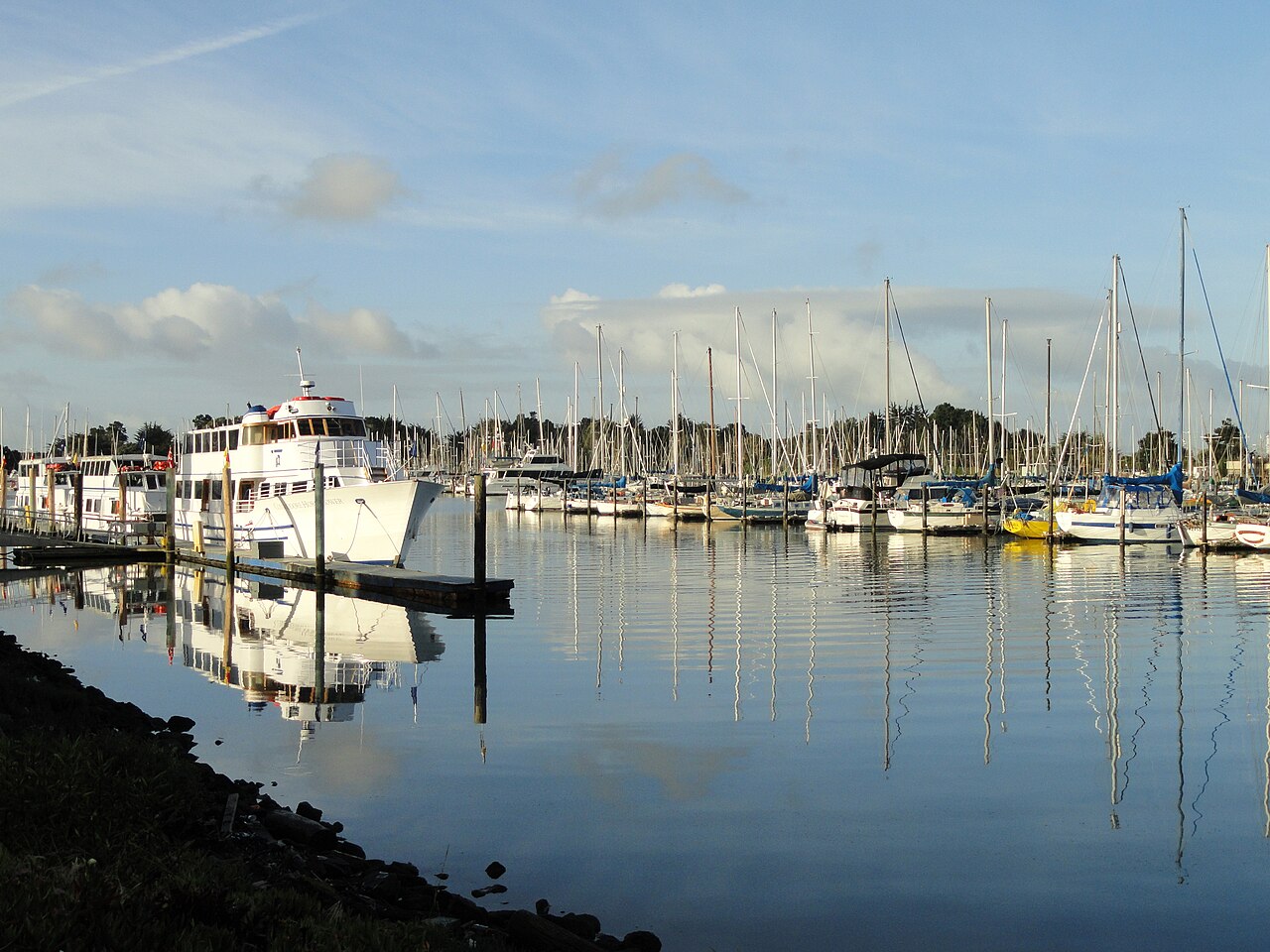
Berkeley’s waterfront is much more than a marina.
The City describes it as a landscape of Bay views, open space, boating, the Bay Trail, César Chávez Park, Shorebird Park, and recreational facilities. The municipal Waterfront Division also operates the largest public marina on the Bay.
César Chávez Park Opens Onto the Bay
At the outer waterfront, the park at the Berkeley Waterfront—widely associated with César Chávez Park—covers approximately 90 acres of grassy open land on a peninsula.
The City describes panoramic views toward San Francisco, the Golden Gate Bridge, Marin Headlands, Bay bridges, and the East Bay hills, with a 1.25-mile accessible loop forming part of the Bay Trail.
This is a strong beginning for the Berkeley story because you can look back toward the hills that form the opposite end of the city.
Bay in front.
University and hills behind.
Outdoor recreation is included as useful local information. Do not combine potentially intoxicating products with cycling, boating, driving, swimming, or any activity requiring alertness or coordination.
Aquatic Park Shows Berkeley’s Urban Waterfront Side
Just inland from the Marina, Aquatic Park offers another kind of water landscape.
The City describes the 100-acre park as having a large lagoon, wetlands, a 2.3-mile accessible loop, walking and biking, bird habitat, picnic areas, and a pedestrian bridge connecting across I-80 toward the Bay shoreline.
This transition is important.
The Bayfront feels broad and exposed.
Aquatic Park sits closer to West Berkeley’s streets, transportation, and developed landscape.
From here, the city begins moving inland.
West Berkeley Still Carries an Industrial and Commercial Identity
East of the waterfront, West Berkeley feels different again.
Historically industrial and working in character, it now mixes workshops, manufacturing, offices, housing, restaurants, retail, and neighborhood commercial districts.
The City’s economic-development map identifies Fourth Street, San Pablo Avenue, University Avenue, and other district organizations as distinct parts of Berkeley’s commercial geography.
That means West Berkeley is not simply the area between the freeway and Downtown.
Its corridors have different functions.
Fourth Street has a concentrated shopping identity.
San Pablo Avenue runs north-south through a broader residential and commercial environment.
University Avenue forms one of Berkeley’s clearest east-west connections, pointing directly toward Downtown and the campus beyond it.
Downtown Berkeley Sits Between the University and the Rest of the City
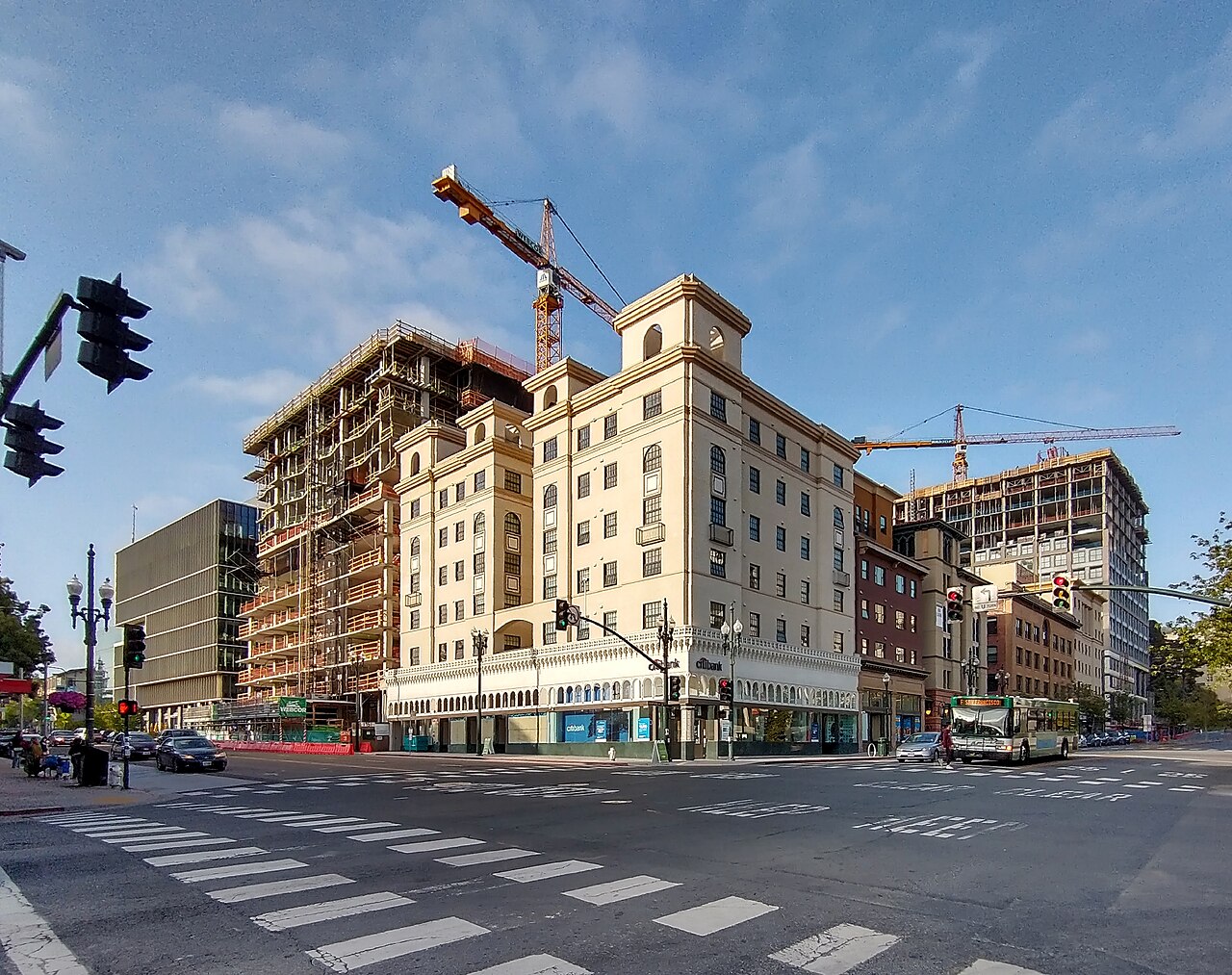
Follow University Avenue east and you eventually reach Shattuck Avenue.
This is Berkeley’s urban center.
The City describes Downtown as a pedestrian-friendly, transit-oriented district combining historic resources with commercial activity and residential growth.
Downtown Berkeley BART sits at 2160 Shattuck Avenue, between Allston Way and Addison Street. BART describes the station as close to UC Berkeley, shops, restaurants, theaters, and other Downtown destinations.
This makes Downtown an unusually clear bridge between city and campus.
Walk east and UC Berkeley begins within a few blocks.
Continue south and Shattuck connects toward South Berkeley.
Move west and University Avenue points back toward the Marina.
Downtown is therefore less an isolated destination than the intersection point between several Berkeley landscapes.
UC Berkeley Changes the Scale of the City
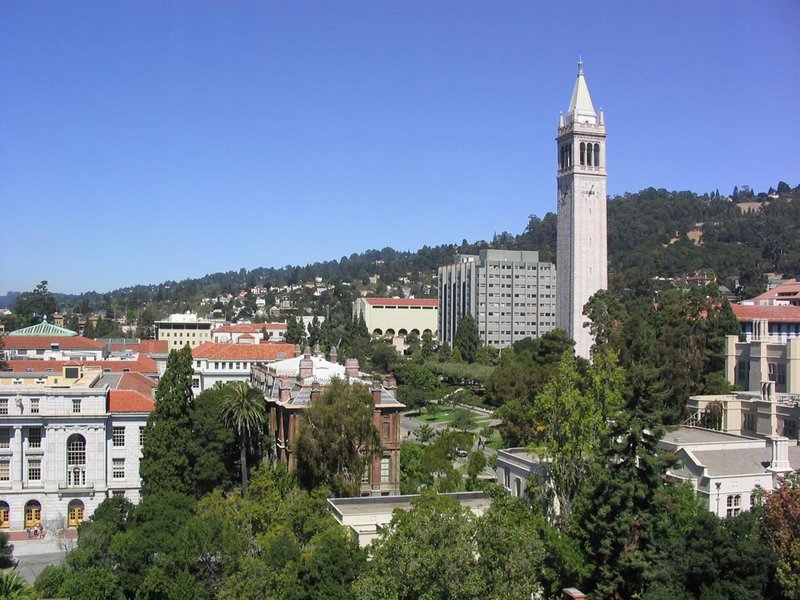
Berkeley is much more than a college town, but the University of California is impossible to separate from the city’s physical identity.
The campus sits directly east of Downtown rather than miles away on an isolated suburban site.
That means campus paths, Downtown streets, Telegraph Avenue, residential neighborhoods, and hill routes blend quickly into one another.
Sather Gate, completed in 1910, remains one of the campus’s recognizable entrances and a longstanding location for student leafleting and public advocacy.
Beyond it rises Sather Tower.
The Campanile is 307 feet tall, visible for miles, and provides a visual landmark connecting the campus with the larger Bay landscape.
Berkeley’s Free Speech History Is Part of the Campus Story
UC Berkeley’s official history identifies the 1964 Free Speech Movement as a defining period when students and administrators clashed over political advocacy on campus.
That history matters because Berkeley’s reputation for public debate and activism did not emerge as a tourism slogan.
It is tied to specific campus spaces and events.
The university therefore contributes more than architecture or enrollment numbers to the city.
It shapes Berkeley’s civic identity.
Telegraph Avenue Connects Campus and Southside
Leave campus near Sather Gate and Telegraph Avenue begins to take over the streetscape.
Telegraph combines restaurants, shops, bookstores, student-oriented businesses, housing, street activity, and cultural history in a concentrated corridor immediately south of campus.
The City recognizes Telegraph as one of Berkeley’s established commercial districts.
Telegraph’s relationship with the university is what matters most here.
It is neither campus nor ordinary residential Berkeley.
It acts as a commercial and cultural transition between the university and Southside.
That makes it one of the best examples of how Berkeley’s neighborhoods depend on their relationships rather than functioning as isolated place names.
South Berkeley Has Its Own Transit and Commercial Geography
Continue south and Berkeley changes again.
Shattuck Avenue and Adeline Street form major corridors through South Berkeley, connecting Downtown with the Ashby BART area.
The City’s planning documents describe the commercial and residential areas between Downtown and Ashby BART as an important piece of Berkeley’s urban fabric.
Ashby BART Station sits at 3100 Adeline Street in southern Berkeley.
BART also notes that its west parking lot hosts the Berkeley Flea Market on Saturdays and Sundays, giving the station area a recurring community-commercial use beyond transit.
South Berkeley also includes the historic Lorin District, where Adeline Street remains an important cultural and commercial corridor.
The Berkeley Juneteenth Festival has repeatedly used this area, reinforcing a South Berkeley event identity distinct from campus or Downtown programming. The City’s 2026 records placed the festival in the Lorin District on Adeline Street.
North Berkeley Is Built Around Different Corridors
North of Downtown, Berkeley’s urban pattern becomes more residential, but commercial districts remain woven through it.
North Shattuck has its own business district.
Solano Avenue stretches toward Albany.
North Berkeley BART sits at 1750 Sacramento Street, where BART specifically highlights access to the Ohlone Greenway.
The City’s commercial-district network also recognizes North Shattuck and Solano as distinct business areas.
This matters because “North Berkeley” is not simply Berkeley above University Avenue.
Its relationship with residential streets, neighborhood shopping, BART, the Ohlone Greenway, and the northern city boundary gives it its own structure.
Climb Into the Berkeley Hills
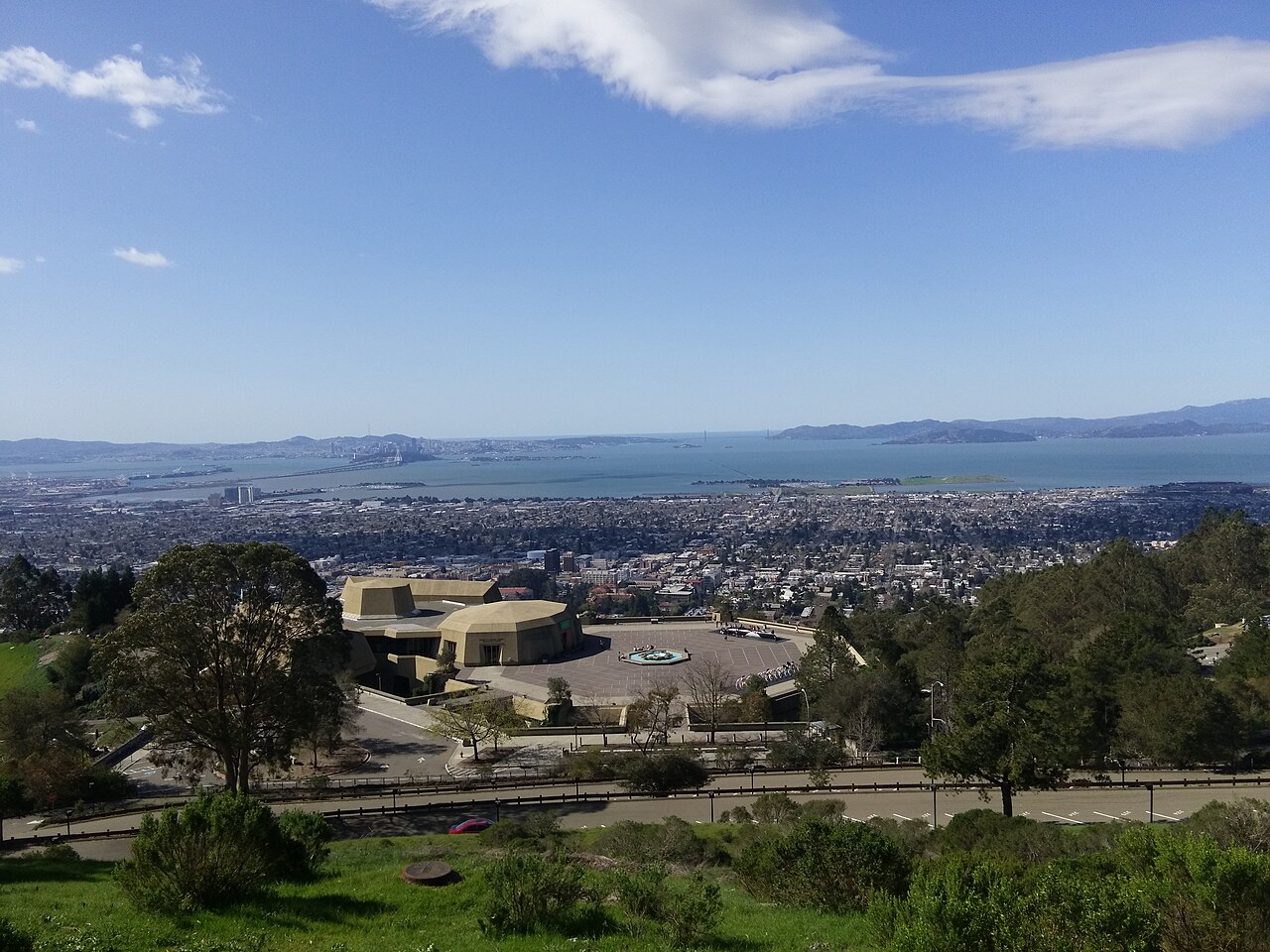
East and northeast of the flatter city, elevation begins to define Berkeley.
The City’s Berkeley Rose Garden at 1201 Euclid Avenue is a terraced amphitheater with approximately 1,500 rose bushes representing 250 varieties and views toward San Francisco Bay and the Golden Gate.
That view makes the garden particularly useful for this page.
From the hills, the geography we started with becomes visible in reverse:
campus;
Downtown;
flatlands;
Bay.
The hills also lead toward Grizzly Peak Boulevard and the much larger open-space environment of Tilden.
Tilden Turns Berkeley Into Regional Parkland
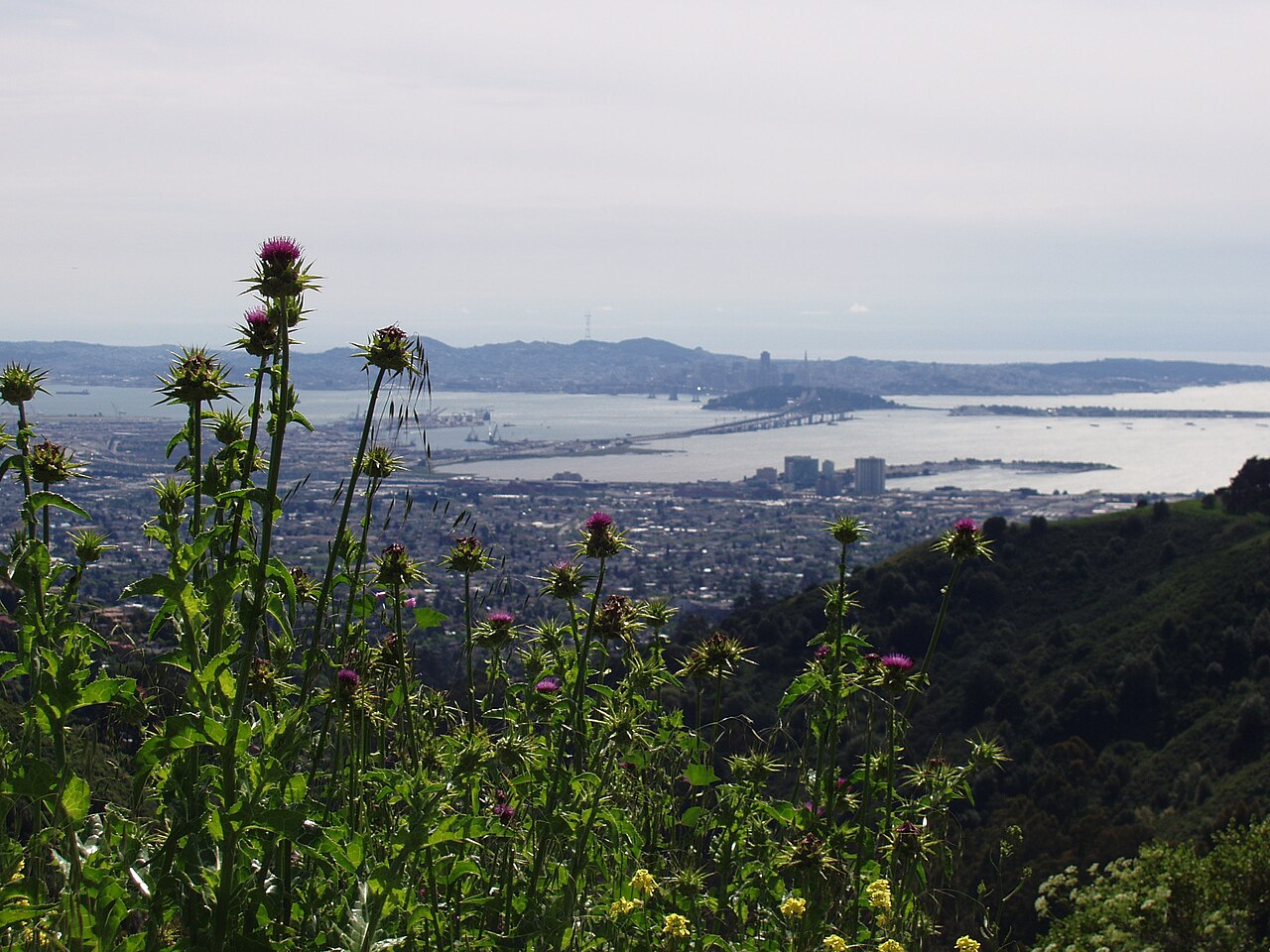
At the crest and beyond, Berkeley reaches Charles Lee Tilden Regional Park.
East Bay Regional Park District describes Tilden as a 2,079-acre regional park with hiking, biking, horseback riding, picnicking, a botanic garden, Little Farm, a merry-go-round, steam train, golf, and Lake Anza.
Tilden matters because it gives Berkeley a dramatic eastern bookend.
The waterfront was open, windy, and maritime.
Downtown was dense and transit-oriented.
Campus mixed architecture and landscape.
The hills become residential and steep.
Tilden finally opens into regional parkland.
That’s Berkeley’s city story from one edge to the other.
Bay → streets → campus → hills → regional open space.
Check current East Bay Parks alerts before visiting. As of September 2026, portions of Tilden are experiencing temporary trail and road impacts from fuels-reduction work, and the upper portion of Laurel Canyon Trail is closed because of storm damage.
Berkeley Has Three BART Stations — and Each Serves a Different City Context
Berkeley’s three BART stations tell a surprisingly useful geographic story.
Ashby serves southern Berkeley around Adeline and South Berkeley.
Downtown Berkeley serves the central business district and provides the closest BART connection to UC Berkeley.
North Berkeley sits within a more residential area and connects with the Ohlone Greenway.
BART currently lists all three as Berkeley stations.
This is why saying “Berkeley has BART” does not tell the whole story.
Each station connects to a different neighborhood environment.
What’s Happening in Berkeley? Events Follow the City’s Districts
Berkeley’s recurring events are distributed across commercial streets, neighborhoods, campus areas, and the waterfront.
Solano Avenue Stroll
The Solano Avenue Stroll is one of Berkeley’s strongest recurring traditions.
Visit Berkeley describes it as an annual September street festival dating to 1974, filling roughly one mile of Solano Avenue with performers, food, artisans, nonprofits, and local businesses. The 2026 edition marks the event’s 50th anniversary.
The event also crosses Berkeley’s relationship with neighboring Albany, making the municipal boundary part of the experience.
Berkeley Juneteenth in South Berkeley
Berkeley’s Juneteenth celebration has a distinctly South Berkeley geography.
The City’s 2026 records place the festival on Adeline Street in the historic Lorin District.
That gives it a different neighborhood context from events around campus or Solano Avenue.
Telegraph Programming
Telegraph has recurring street programming of its own. City cultural-funding documents include Telegraph Second Sundays among supported Berkeley cultural events.
Waterfront Events
The Berkeley Waterfront also supports event venues at areas including Marina Mall, South Cove, Gateway Pier, and the south César Chávez peninsula.
Use the Live Berkeley Calendar
Berkeley’s event schedule changes throughout the year.
Use the current calendar for specific dates, street closures, registrations, and operating details.
Berkeley’s Neighborhoods and Nearby Cities Are Not Interchangeable
Berkeley’s compact size can make municipal boundaries easy to overlook.
Within Berkeley are districts and areas such as:
Downtown;
Southside;
West Berkeley;
South Berkeley;
North Berkeley;
Elmwood;
Lorin;
North Shattuck;
Claremont-area neighborhoods;
the Berkeley Hills.
Nearby cities are separate.
Albany is an incorporated city immediately north and northwest of Berkeley.
Emeryville is a separate city southwest of Berkeley.
Oakland lies south and southeast.
Kensington to the north is an unincorporated Contra Costa County community rather than a Berkeley neighborhood.
One local-name distinction is especially important:
Berkeley’s Richmond District is not Richmond, California—and in practice Berkeley is more commonly discussed through areas such as West Berkeley, North Berkeley, South Berkeley, Elmwood, and the hills rather than borrowing San Francisco-style district names.
Regional pages should follow actual geography, not keyword adjacency.
UC Berkeley Housing Requires Its Own Package-Receiving Check
University housing creates a receiving environment unlike a detached home or conventional apartment.
UC Berkeley Housing states that campus-housing residents receive letter mail through building mailboxes, while packages that do not fit are generally held at the central office. It also notes that some affiliated apartments and Blackwell Hall use different procedures.
UC Berkeley Housing mail service →
Psychedelics Zone does not control UC Berkeley housing policies, residence-hall rules, mailrooms, or package acceptance.
Students and university-housing residents should verify the current policy for their specific building before ordering.
The presence of UC Berkeley on this page does not imply any university relationship, approval, sponsorship, or endorsement.
Receiving Mushroom Shipping at Berkeley Homes and Apartments
Away from campus, Berkeley still has a wide range of housing types.
City planning materials note that detached housing remains common, while higher-density housing clusters around Downtown, UC Berkeley, the West Berkeley/Amtrak area, and major commercial corridors such as Shattuck, University, and San Pablo avenues.
That creates several receiving environments.
A hillside residence may receive packages at a front door.
An older apartment near Telegraph may have a shared entry.
A Downtown building may use lockers or building staff.
A West Berkeley mixed-use building may have another arrangement entirely.
Use the complete valid address and all necessary apartment or unit information.
Review Current Shipping Information →
Compare Mushroom Gummies, Chocolates, Capsules and Other Formats
People searching for magic mushrooms Berkeley, mushroom chocolates Berkeley, mushroom chocolate bars Berkeley, or shroom bars Berkeley may use those phrases broadly.
The actual product listing matters more than the search term.
The live Psychedelics Zone Shop currently includes gummies, chocolates, capsules, tinctures, spritzes, drink mixes, dried mushroom products, Wellness & Intention products, and bundles.
Compare All Current Product Formats →
Mushroom Gummies
Gummies provide a flavored edible format.
Different products can vary substantially in ingredients and formulation. The current Shop specifically cautions that a mushroom gummy should not automatically be assumed to contain psilocybin.
Mushroom Chocolates and Chocolate Bars
Chocolate receives meaningful semantic coverage because the uploaded keyword dataset shows particularly strong commercial interest around mushroom chocolate, mushroom chocolate bars, magic mushroom chocolate, and shroom bars.
The live Shop currently includes multiple chocolate products, but individual product pages remain the source of truth for ingredients and formulation.
Mushroom Capsules
Capsules offer a compact, flavor-free alternative to gummies or chocolate products.
Drink Mixes and Other Formats
The current catalog also includes drink mixes, tinctures, spritzes, dried mushroom products, Wellness & Intention products, and bundles.
A mushroom product is not automatically a psilocybin product, and a mushroom chocolate is not automatically a magic mushroom chocolate.
Check the current individual listing before ordering.
What Should You Look for Before Choosing?
Comparing format is only one step.
The Psychedelics Zone guide How to Select Quality Mushrooms for Safe Use discusses labeling, packaging, visible quality indicators, and source-evaluation considerations that can help shoppers know what information to look for.
How to Select Quality Mushrooms for Safe Use →
Use educational content as a starting point, then rely on the current individual product listing for exact ingredients, formulation, serving information, and availability.
Explore Current Psychedelics Zone Brands
Brands change more quickly than Berkeley’s geography.
Use the current Psychedelics Zone Brands directory as the source of truth rather than maintaining a static roster on the Berkeley page.
Explore Psychedelics Zone Brands →
Frequently Asked Questions
Does Psychedelics Zone ship mushroom products to Berkeley?
Yes. The current Psychedelics Zone Shipping Policy states that eligible orders ship to all 50 U.S. states, which includes valid Berkeley street addresses. Orders are placed online rather than through a Berkeley storefront.
Is mushroom shipping in Berkeley discreet?
Yes. The current policy describes plain, discreet exterior packaging with no product details visible outside. That does not guarantee private receipt once a parcel reaches a shared mailroom, front desk, package locker, or university receiving system.
Does Psychedelics Zone offer same-day mushroom delivery in Berkeley?
This page does not claim same-day local delivery. Psychedelics Zone fulfills Berkeley orders through shipping rather than a Berkeley courier, warehouse, pickup point, or local inventory operation.
Is UC Berkeley part of the City of Berkeley?
UC Berkeley is physically embedded in Berkeley and deeply connected with the city, but the university campus and university housing have their own institutional administration and policies. Package acceptance in university housing should be confirmed with UC Berkeley Housing.
How many BART stations does Berkeley have?
Berkeley has three BART stations: Ashby, Downtown Berkeley, and North Berkeley. Each serves a different part of the city.
Does Berkeley have a Bay waterfront?
Yes. Berkeley has an extensive public waterfront including the Berkeley Marina, César Chávez Park, Bay Trail connections, Shorebird Park, and other recreation areas along San Francisco Bay.
Is Tilden Regional Park inside Berkeley?
Tilden reaches the Berkeley Hills and has multiple entrances using Berkeley streets and addresses, but it is an East Bay Regional Park District property rather than a City of Berkeley municipal park.
Is Albany part of Berkeley?
No. Albany is a separate incorporated city immediately north of Berkeley. Oakland and Emeryville are also separate cities, while Kensington is an unincorporated community in Contra Costa County.
From the Bay to Tilden
Berkeley’s identity becomes clearest when you cross it.
Start beside San Francisco Bay at the Marina.
Move through West Berkeley’s former industrial landscape and commercial corridors.
Follow University Avenue into Downtown.
Cross Shattuck and the university begins almost immediately.
Telegraph extends campus energy into Southside.
North and south, BART stations connect different residential and commercial districts.
Then the streets begin climbing.
The Campanile drops below you.
The Bay opens in the distance.
And eventually the city gives way to the much larger landscape of Tilden Regional Park.
Bay. West Berkeley. Downtown. Campus. Hills. Tilden.
That’s Berkeley.
When you’re ready to shop, Psychedelics Zone lets Berkeley customers compare mushroom gummies, mushroom chocolates and chocolate bars, capsules, drink mixes, and other current formats online before reviewing current shipping information and placing an eligible order.
Responsible Purchasing
The current Psychedelics Zone Shipping Policy states that customers confirm they are 21+ when ordering and are responsible for complying with applicable local and state laws.
Review each live product page for current ingredients, formulation, serving information, and availability.
Do not assume that a mushroom product contains psilocybin unless the individual product listing verifies it.
Never drive, cycle, boat, swim, or participate in activities requiring alertness, balance, coordination, or judgment while impaired.
Product and educational information should not be treated as medical advice.
ZIP Codes Serving Berkeley
The principal Berkeley ZIP areas identified in City materials are:
94702, 94703, 94704, 94705, 94707, 94708, 94709, 94710, 94720
City planning materials group 94702, 94703, 94704, 94709, and 94710 broadly with the flatter western/central city; 94705, 94707, and 94708 with the hillier east/northeast side; and identify 94720 with UC Berkeley.
Important postal note: 94720 is strongly associated with the UC Berkeley campus and should not be treated like an ordinary residential neighborhood ZIP. University housing has separate mail procedures. ZIP boundaries also do not perfectly define municipal or neighborhood boundaries, so shipping eligibility should be determined from the complete valid street address.