
Mushroom shipping Miami customers can explore online serves a city shaped by Biscayne Bay, the Miami River and neighborhoods with deep Caribbean and Latin American connections. Downtown and Brickell rise beside the water, Little Havana extends west along Calle Ocho, Wynwood turns former industrial blocks into a creative district, and Coconut Grove brings Miami back to a leafy shoreline farther south. For people searching for mushroom delivery in Miami, Psychedelics Zone offers online ordering with shipping rather than a Miami storefront or locally dispatched courier.
Psychedelics Zone is an online dispensary where Miami customers can browse available formats, compare individual product information and place eligible orders for shipment.
Explore the Psychedelics Zone Shop →
Mushroom Shipping in Miami: What It Means
Miami is dense enough that “delivery” can easily sound like an order being dispatched from somewhere nearby.
Psychedelics Zone works differently.
Orders are placed online, and eligible purchases are shipped to the customer’s address. This page does not represent a Miami storefront, warehouse, pickup counter, locally stocked inventory or same-day courier operation.
Shipping details include tracking after shipment and plain, discreet exterior packaging. However, discreet packaging does not guarantee private receipt.
A Brickell condominium may use a concierge or package room. Downtown towers can have staffed receiving areas, while duplexes, apartments and houses in other Miami neighborhoods may rely on very different arrangements.
Therefore, use your complete street address and include every required apartment, suite or unit number.
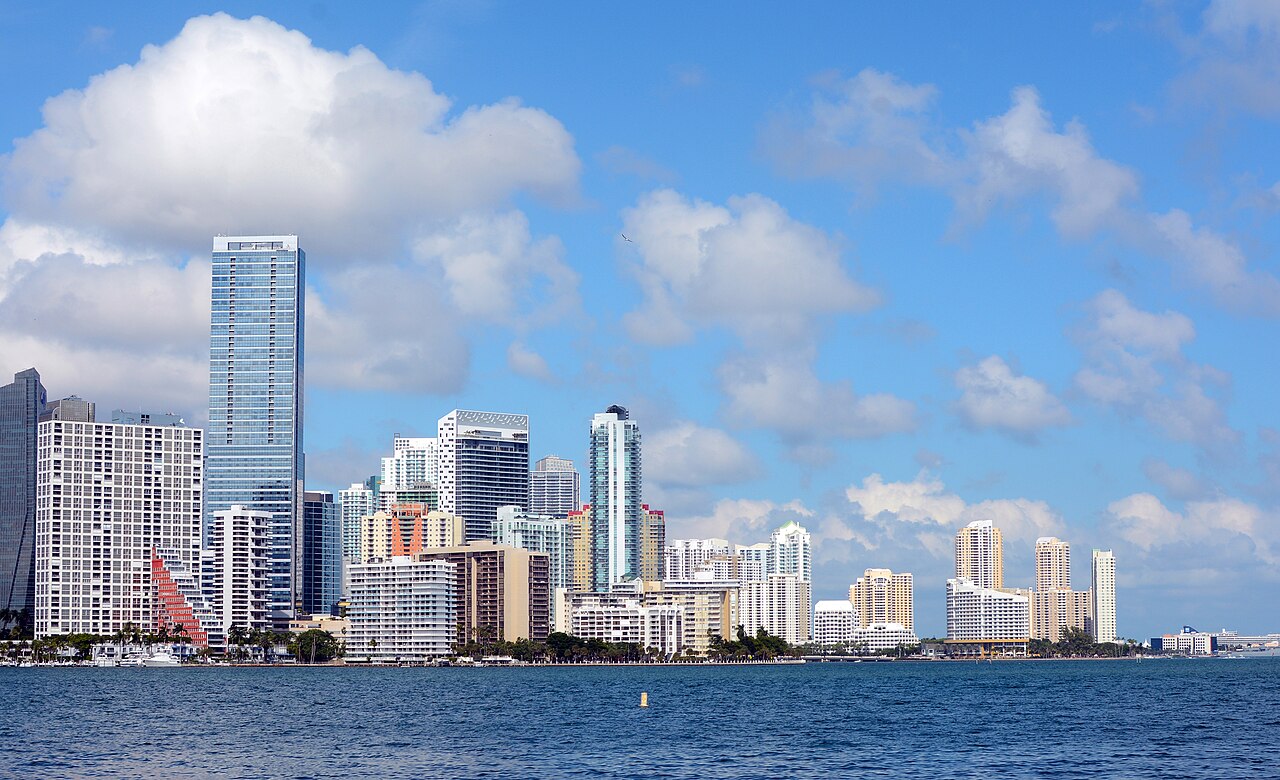
Miami Begins With Biscayne Bay
Water is not a decorative backdrop to Miami.
It helps explain where the city developed and why its neighborhoods feel so different.
Biscayne Bay defines Miami’s eastern side. Downtown rises beside it, Brickell occupies the waterfront immediately south of the Miami River, and Coconut Grove returns the city to the Bay farther down the shoreline.
That creates a useful way to read Miami:
Bay → Downtown → river → neighborhoods → Bay again.
It also explains an important geographic distinction.
Miami Beach sits across Biscayne Bay on barrier islands. Despite the shared name and strong regional relationship, Miami Beach is a separate incorporated city.
The City of Miami is on the mainland side of the Bay.
Downtown Miami Meets the Water
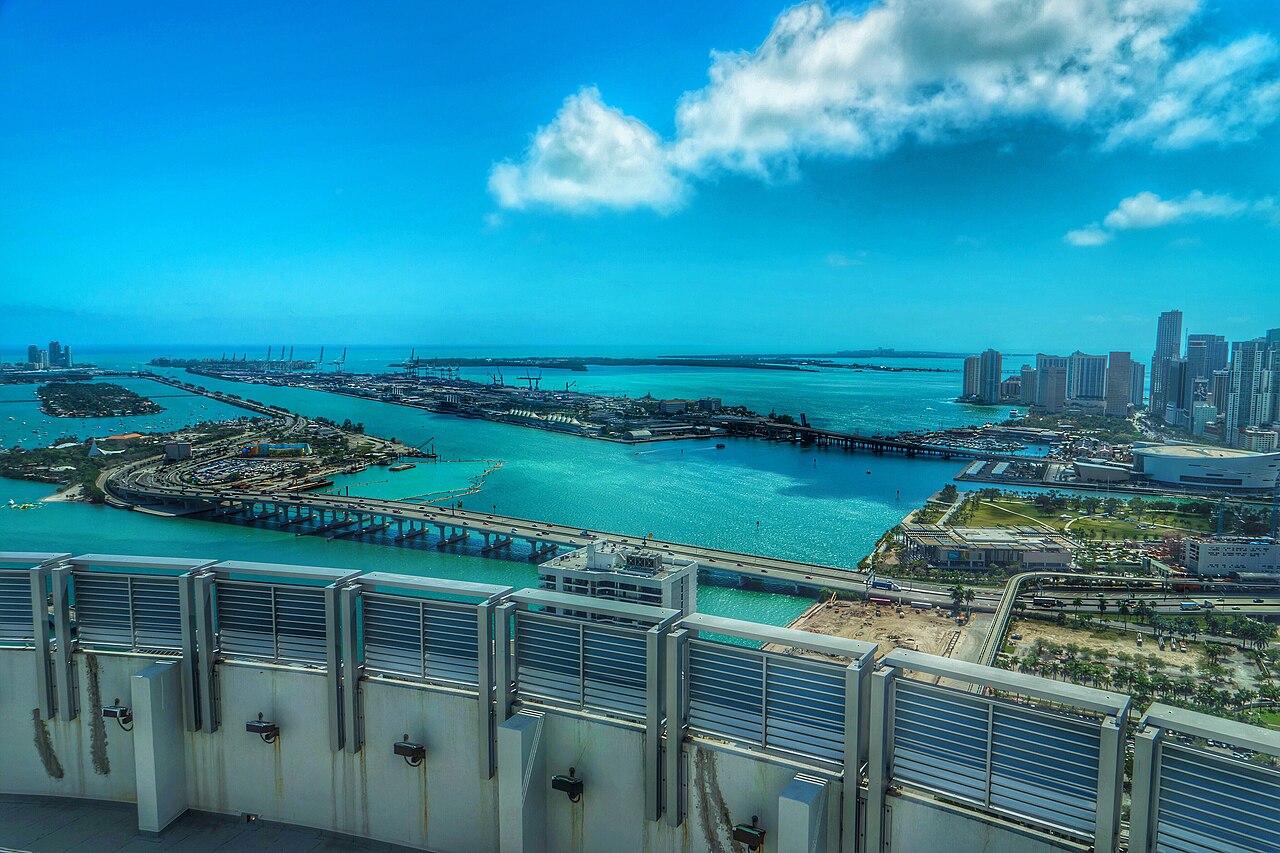
Downtown places Miami’s urban center directly against Biscayne Bay.
High-rises, government buildings, Miami Dade College, cultural venues and transit all converge within a relatively compact area.
The waterfront gives Downtown another dimension.
Instead of ending at an inland business district, central Miami opens east toward Biscayne Bay.
Metromover makes this part of Miami unusually easy to understand from above street level.
The free elevated system serves 21 stations across Downtown, Omni and Brickell. Its loops connect major destinations while also revealing just how close many central districts are to one another.
That relationship makes transit part of the city experience rather than simply a way to reach it.
Downtown → waterfront → Brickell can be understood as one connected central-city landscape.
The Miami River Divides Downtown From Brickell
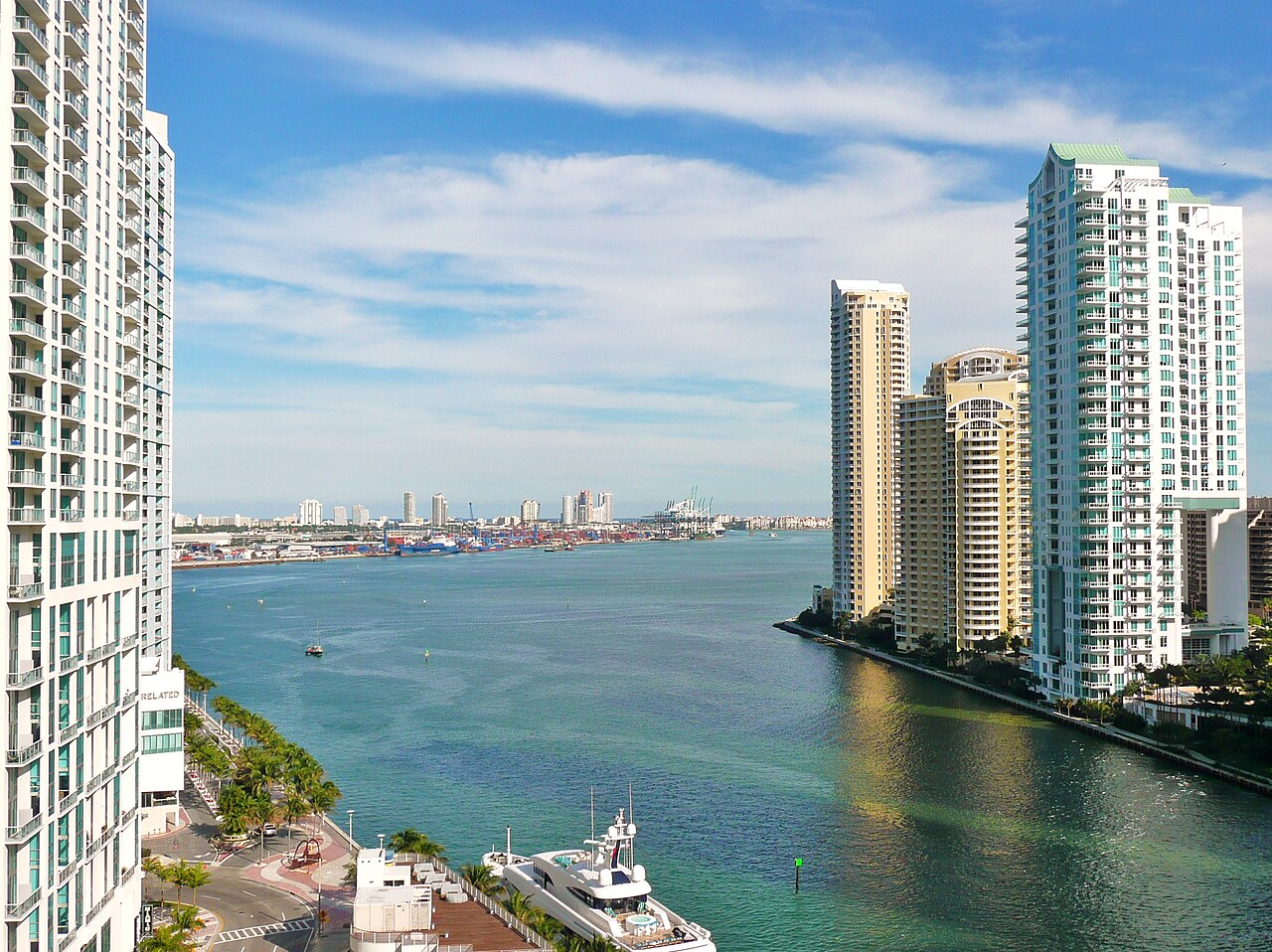
The Miami River enters Biscayne Bay between Downtown and Brickell.
That makes the river one of Miami’s most important geographic seams.
To the north lies Downtown. Immediately south, Brickell has developed into one of the city’s densest residential and commercial districts.
The river itself adds another layer through bridges, boats, waterfront businesses and the working history of Miami.
This is why Brickell should not simply be described as a skyline.
Its location makes more sense when the river comes first.
Biscayne Bay lies to the east.
The Miami River defines its northern edge.
Dense towers rise between major streets and transit stations.
Together, those features give Brickell a very different identity from Miami’s lower-rise residential neighborhoods.
Little Havana Moves Miami West Along Calle Ocho
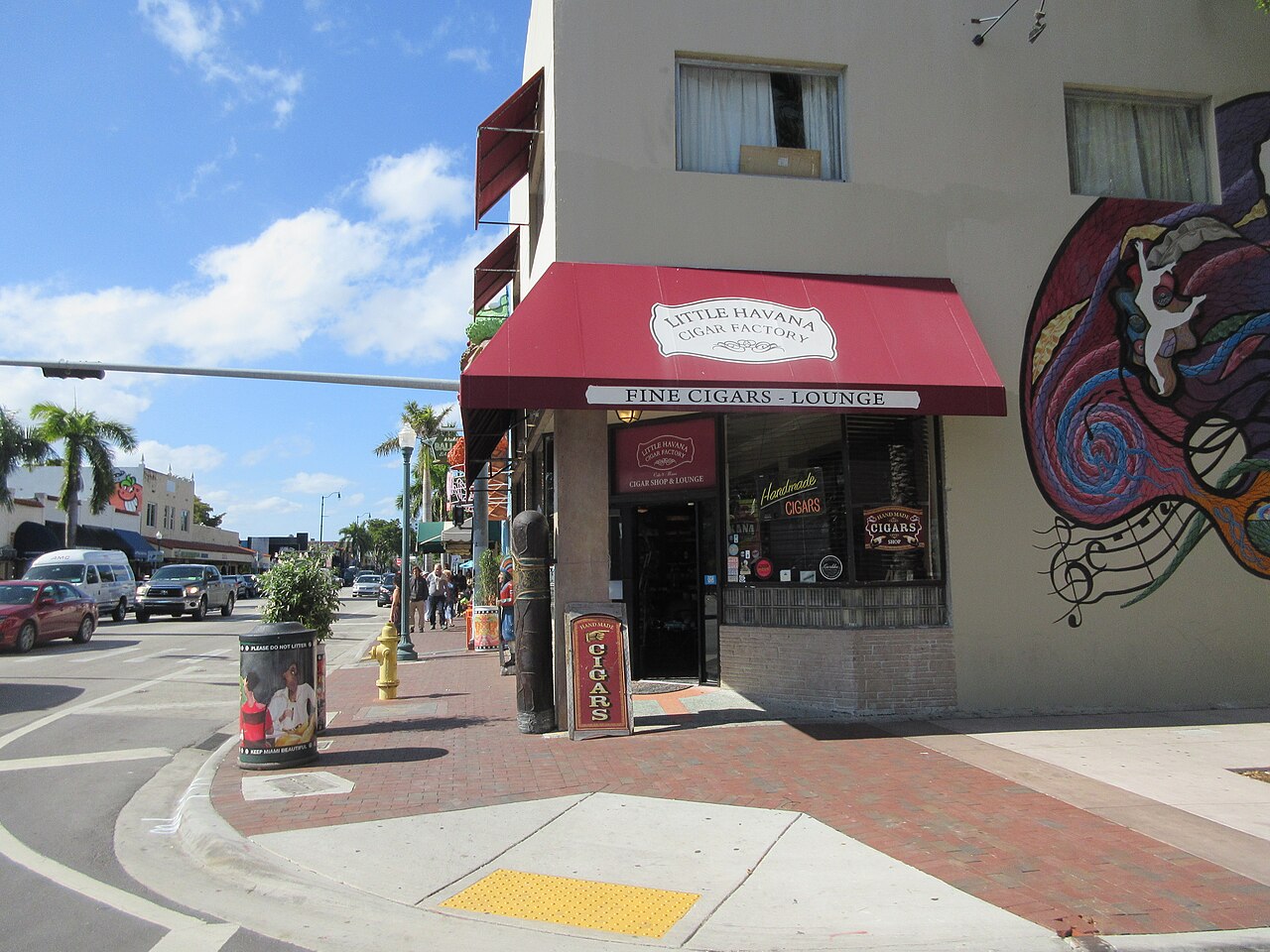
Travel west from Brickell and Downtown and the city changes quickly.
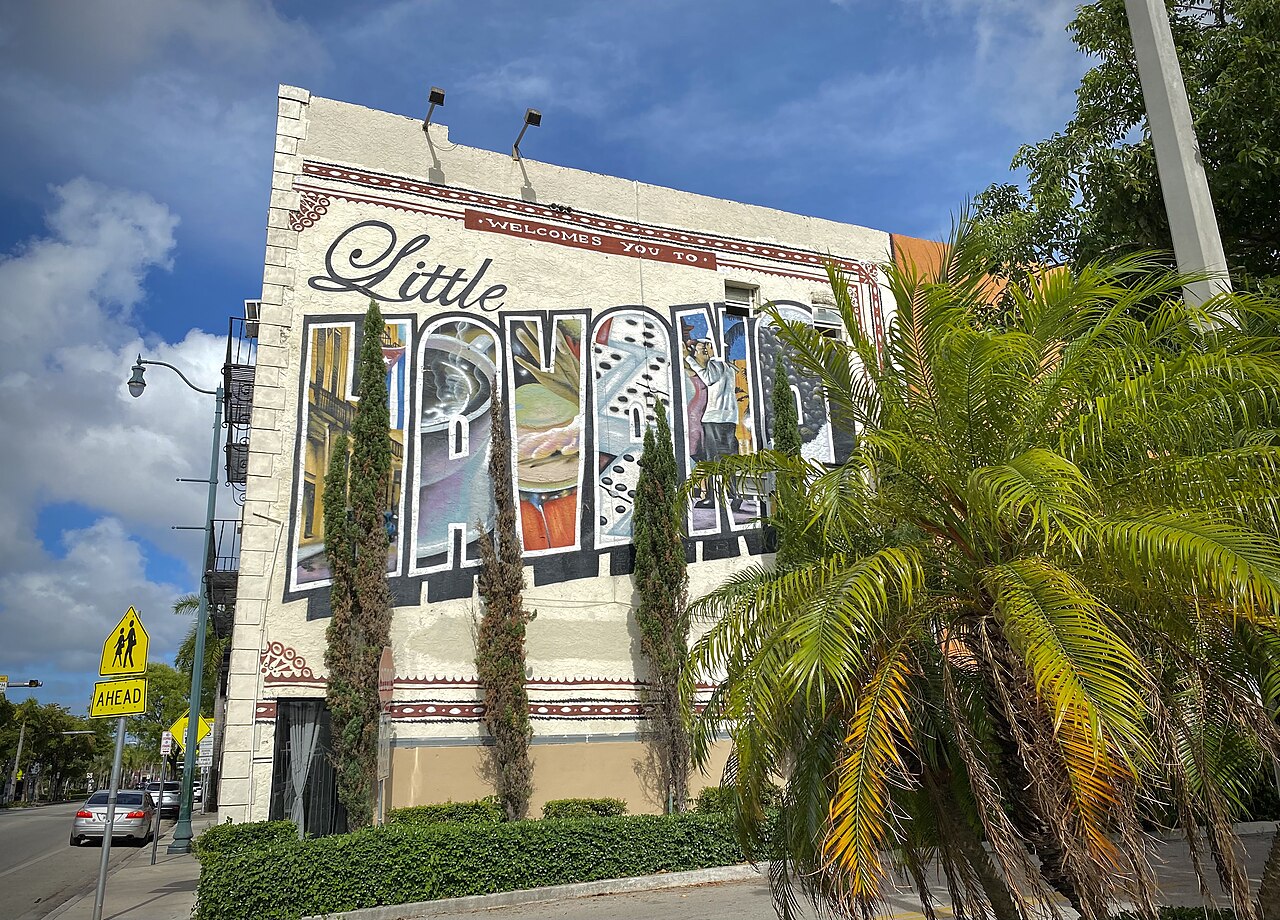
Little Havana is one of Miami’s most culturally significant neighborhoods, and Calle Ocho — Southwest Eighth Street — forms its best-known corridor.
Restaurants, bakeries, cafés, small businesses, music, public art and gathering places make the street part of everyday neighborhood life rather than simply a visitor destination.
Little Havana’s importance comes from the communities that reshaped Miami during successive waves of migration.
Cuban influence is central to that story. However, contemporary Little Havana also reflects Miami’s wider Latin American identity.
The result is a corridor where food, language, music, commerce and community overlap.
That relationship becomes especially visible during Calle Ocho Music Festival, when blocks of Southwest Eighth Street become an enormous public celebration.
Wynwood Tells a Different Reinvention Story
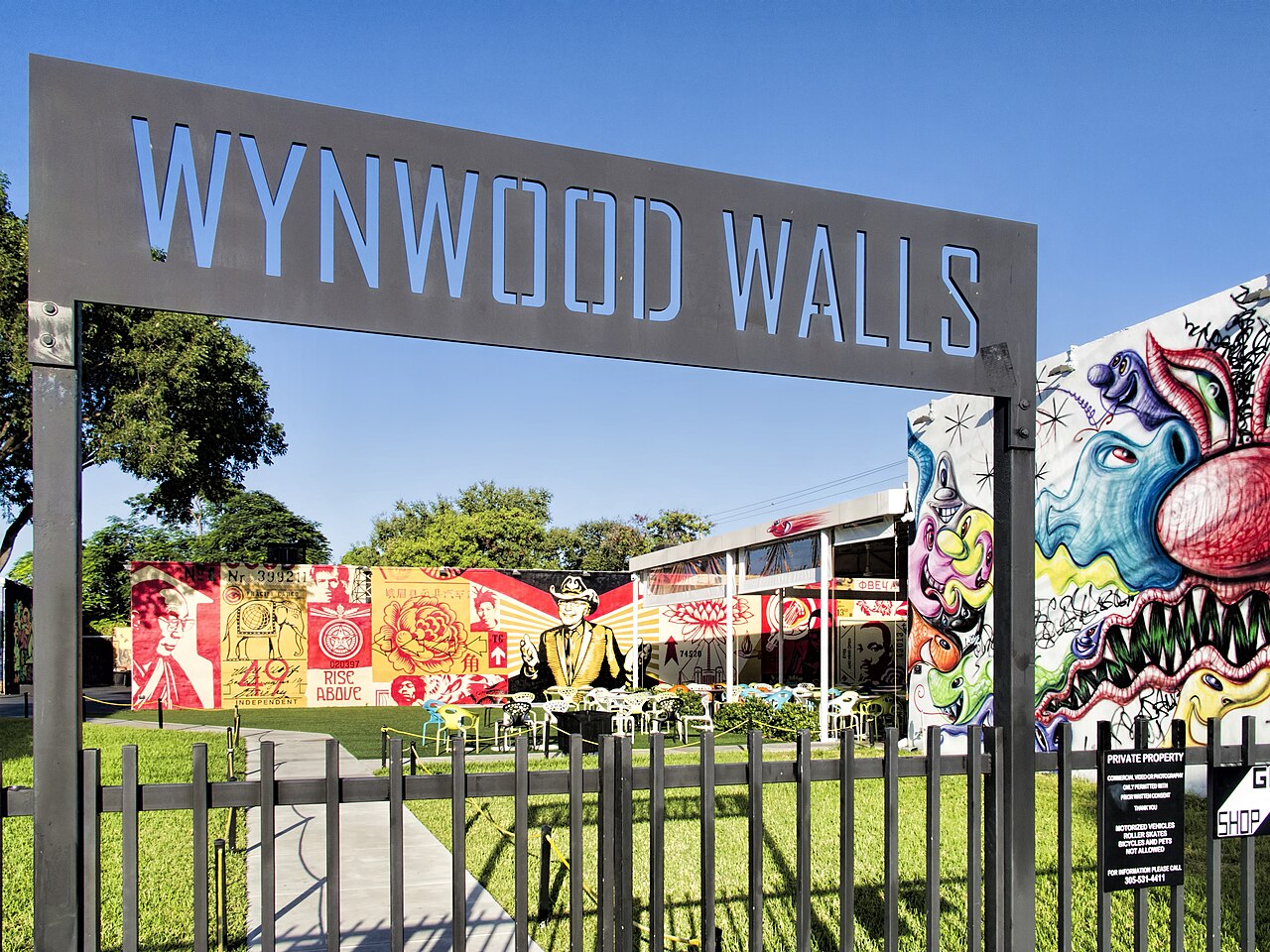
North of Downtown, Wynwood represents another version of Miami.
The district was once strongly associated with manufacturing, logistics and garment businesses. As industrial uses declined, vacant and underused buildings increasingly attracted galleries and creative activity.
By the late 1990s and early 2000s, that transition was accelerating.
Today, murals, galleries, restaurants, retail, offices and new residential development have transformed the district again.
Explore Wynwood’s planning history →
The industrial history matters because it explains the neighborhood’s visual language.
Large walls created canvases.
Warehouse-scale buildings accommodated new uses.
Consequently, Wynwood’s art identity is connected to the physical neighborhood it inherited rather than simply being decoration added to an unrelated district.
Overtown and Little Haiti Add Essential Cultural Geography
Miami cannot be understood only through Downtown, Brickell and newer creative districts.
Overtown is one of the city’s historically Black neighborhoods and sits immediately northwest of Downtown.
Its history connects Miami with Black business, music, churches, community institutions and the consequences of major transportation infrastructure cutting through established neighborhoods.
Farther north, Little Haiti represents another major cultural center.
Haitian migration added language, food, music, businesses and institutions that became essential to Miami’s modern identity.
These neighborhoods matter because Miami is not simply “Latin” or “Caribbean” in a generic sense.
Different communities built distinct cultural landscapes within the same city.
Coconut Grove Brings Miami Back to Biscayne Bay
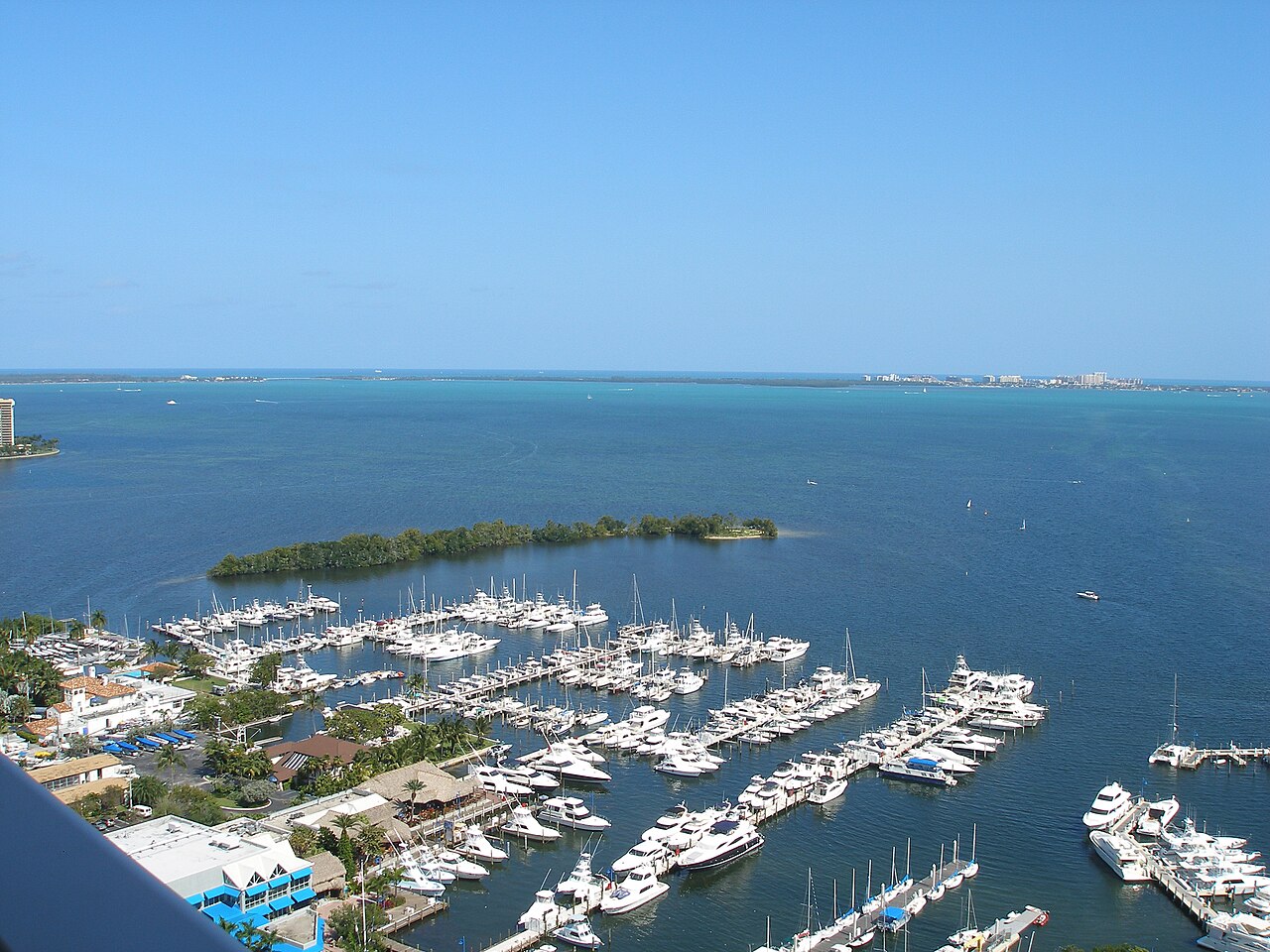
Travel south and Coconut Grove creates another major change.
The Grove predates the modern skyline and remains one of Miami’s oldest continuously settled communities.
Its streets, mature tree canopy and lower-rise areas feel markedly different from Downtown and Brickell.
Then the neighborhood reaches Biscayne Bay.
This relationship makes Coconut Grove an ideal final stop in the city’s geographic progression.
Miami begins on the Bay in Downtown.
The Miami River cuts through the center.
Little Havana takes the story west.
Coconut Grove returns it to the shoreline.
The neighborhood’s connection with Biscayne Bay also supports one of Miami’s major annual cultural traditions: the Coconut Grove Arts Festival.
Enjoy Miami’s shoreline, parks and outdoor spaces separately from intoxicating products. Boating, swimming, cycling and other activities requiring coordination and judgment should remain separate from impairment.
Miami’s Transit Network Connects Very Different Districts
Miami is often associated with driving, but rail and elevated transit create important connections through the urban core.
Metrorail runs for 25 miles and links Miami International Airport with Downtown and communities across Miami-Dade County.
Metromover then circulates through central Miami.
The free system reaches from Brickell’s Financial District through Downtown toward the Omni area.
Explore Miami-Dade Metrorail →
Miami’s trolley network adds neighborhood connections, with routes serving areas including:
- Allapattah
- Biscayne
- Brickell
- Coconut Grove
- Coral Way
- Little Haiti
- Little Havana
- Overtown
- Wynwood
Together, these systems reveal how the city is organized around corridors rather than one compact center.
Comparing Mushroom Formats Online in Miami
People searching for magic mushrooms Miami, mushroom chocolates Miami, mushroom chocolate bars Miami or shroom bars Miami may use those phrases broadly.
A search phrase does not establish what an individual product contains.
Depending on availability, the Psychedelics Zone catalog may include formats such as:
- Mushroom chocolates and chocolate bars
- Gummies
- Capsules
- Tinctures
- Spritzes
- Drink mixes
- Dried mushroom products
- Wellness products
- Bundles
Explore the Psychedelics Zone Shop →
Mushroom Chocolates and Chocolate Bars
Mushroom chocolate, mushroom chocolate bars and shroom bars represent meaningful commercial search categories.
However, the category name is not an ingredient list.
A mushroom chocolate bar should not automatically be treated as a psilocybin chocolate. Review the individual product listing for ingredients, formulation and product-specific information.
Mushroom Gummies
Gummies provide another edible format for customers comparing the online catalog.
Because individual formulations differ, check the specific product listing rather than assuming every mushroom gummy contains the same ingredients.
Mushroom Capsules
Capsules offer a non-confection format for customers comparing available products.
As with chocolates and gummies, use the individual product page for ingredient and formulation details.
Learn Before You Choose
Format is only one part of comparing mushroom products.
Ingredients, labeling, packaging and product-specific information deserve attention too.
The Psychedelics Zone guide How to Select Quality Mushrooms for Safe Use explores mushroom quality indicators, labeling and packaging considerations in greater depth.
How to Select Quality Mushrooms for Safe Use →
Miami Events Bring Its Cultural Geography Into the Street
Miami’s strongest recurring events do more than fill a calendar.
They show where different parts of the city gather.
Calle Ocho Fills Little Havana
Calle Ocho Music Festival transforms 15 blocks of Southwest Eighth Street through Little Havana with music stages, food and cultural programming.
In 2027, the festival returns March 14.
Explore Calle Ocho Music Festival →
The location is what makes the event useful here.
Little Havana’s defining commercial and cultural corridor becomes the festival itself.
Coconut Grove Arts Festival Follows the Bay
Coconut Grove’s annual arts festival creates an entirely different Miami experience.
The festival runs along McFarlane Road, South Bayshore Drive and Pan American Drive beside Biscayne Bay.
The 2027 festival is scheduled for February 13–15.
Explore Coconut Grove Arts Festival →
Its setting reinforces Coconut Grove’s relationship with the waterfront rather than placing the event in a generic convention hall.
Miami Book Fair Turns Downtown Into a Literary District
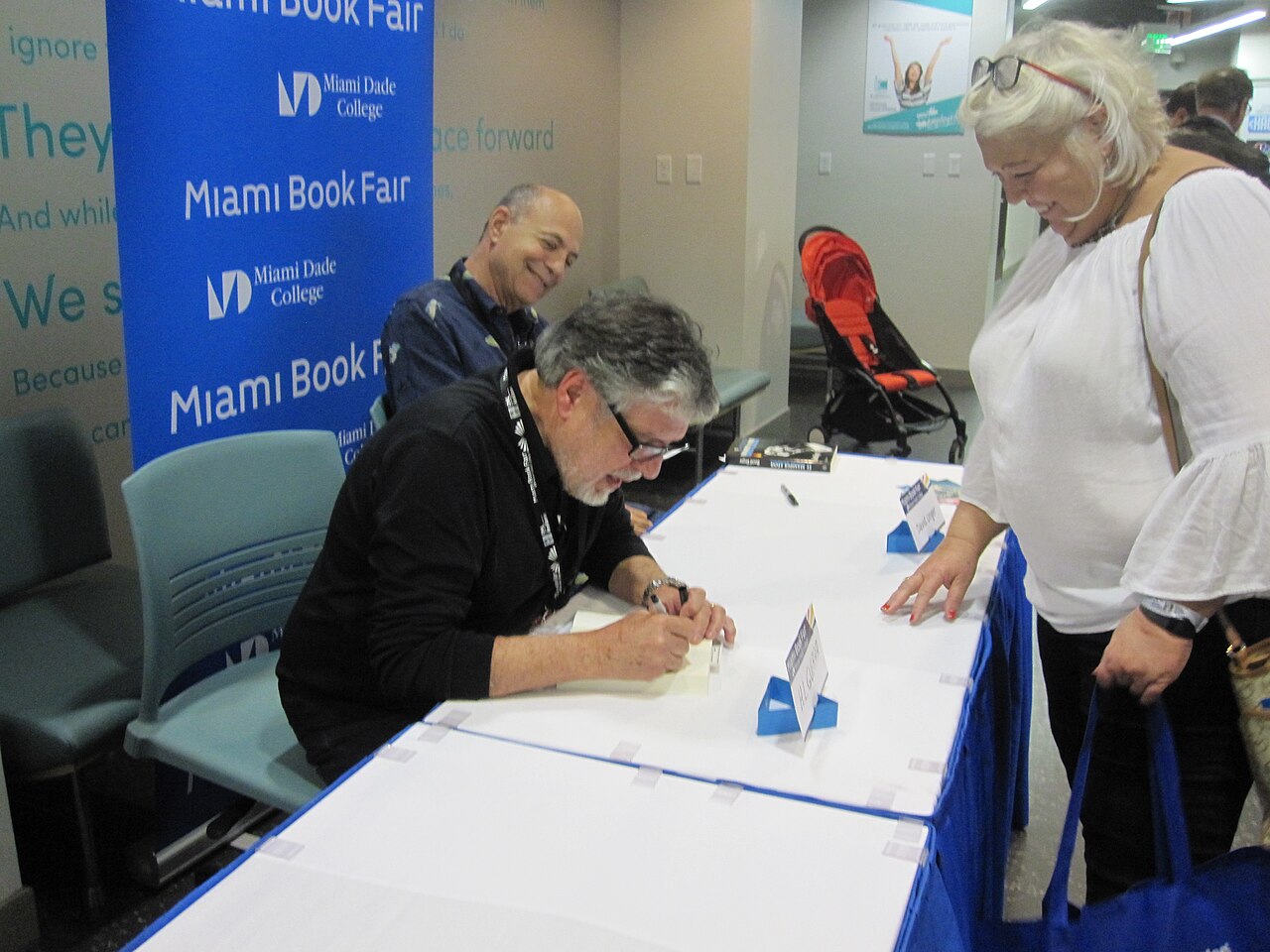
Each November, Miami Book Fair transforms part of Downtown around Miami Dade College into a multilingual literary gathering.
The 2026 Fair runs November 15–22, with the Street Fair scheduled for November 20–22.
Programming includes English, Spanish, Haitian Creole and French, reflecting Miami’s multilingual cultural landscape.
Together, these events reveal three different versions of Miami:
Little Havana in the street.
Coconut Grove beside the Bay.
Downtown through books and language.
Receiving a Shipped Order in Miami
Miami’s housing patterns create several different package-receiving environments.
Brickell and Downtown contain large condominium and apartment towers where packages may pass through staffed desks, lockers or centralized receiving rooms.
Wynwood and Edgewater include newer multifamily buildings alongside older properties.
Little Havana, Allapattah and other neighborhoods combine apartments, duplexes, houses and small multifamily buildings. Coconut Grove adds condominiums, apartments and detached homes.
A parcel may therefore reach:
- A private entrance
- A shared apartment entrance
- A condominium front desk
- A concierge
- A package room
- A parcel locker
- A leasing office
- Another designated receiving area
Plain exterior packaging does not guarantee private receipt.
Before ordering, enter the complete address, include all unit information and understand how the destination property handles packages.
Miami Is Not Miami Beach — and Miami-Dade Is Much Larger Than Both
Local geography matters especially here.
Brickell, Downtown, Little Havana, Wynwood, Overtown, Allapattah, Little Haiti and Coconut Grove are within the City of Miami.
Miami Beach is a separate incorporated city across Biscayne Bay.
Coral Gables is also a separate city, even though it borders Miami near Coconut Grove.
Other familiar regional names such as Hialeah, Miami Springs, North Miami and Key Biscayne are separate municipalities too.
Meanwhile, “Miami” appears in the mailing addresses of many places that are not actually inside the City of Miami.
That distinction keeps this page centered on the incorporated city rather than turning it into a generic Miami-Dade County landing page.
Frequently Asked Questions
Does Psychedelics Zone offer mushroom delivery in Miami?
Psychedelics Zone serves Miami through online shipping rather than a locally dispatched Miami courier. Searches for mushroom delivery Miami may lead customers here, but this page does not represent a Miami storefront, warehouse, pickup location or same-day courier operation.
Is Miami Beach a neighborhood of Miami?
No. Miami Beach is a separate incorporated city across Biscayne Bay from Miami. Brickell, Little Havana, Wynwood and Coconut Grove are examples of communities within the City of Miami.
Why is the Miami River important to Downtown and Brickell?
The Miami River enters Biscayne Bay between Downtown and Brickell, making it a major geographic dividing line within central Miami. Downtown occupies the north side of the river, while Brickell begins immediately to the south.
Have another question?
Visit the Psychedelics Zone FAQ →
From Biscayne Bay to Little Havana and Back Again
Miami becomes more interesting when the city is separated from the image people have of the larger region.
Begin at Biscayne Bay.
Downtown rises against the shoreline, while the Miami River separates the central core from Brickell.
Move west and Little Havana turns Calle Ocho into one of the city’s strongest cultural corridors.
North of Downtown, Overtown, Wynwood and Little Haiti tell very different stories about Black Miami, industrial reinvention and Haitian Miami.
Travel south instead and Coconut Grove brings the city back beneath a mature tree canopy and onto Biscayne Bay.
Bay. Downtown. River. Neighborhood. Culture. Bay.
That’s Miami.
When you’re ready to compare available formats online, Psychedelics Zone lets Miami customers browse the shop, review individual product information and check shipping details before placing an eligible order.
Explore the Psychedelics Zone Shop →
Responsible Purchasing
Customers must be 21+ to order and are responsible for following applicable local and state laws.
Always review the individual product listing for ingredients, formulation and product-specific information. A mushroom category, product name or Miami search phrase does not automatically establish that an item contains psilocybin.
Additionally, never drive, cycle, boat, swim or participate in another activity requiring alertness, balance, coordination or judgment while impaired.
Product and educational information should not be treated as medical advice.
ZIP Codes Serving Miami
Principal ZIP codes containing City of Miami addresses include:
- 33125
- 33126
- 33127
- 33128
- 33129
- 33130
- 33131
- 33132
- 33133
- 33134
- 33135
- 33136
- 33137
- 33138
- 33142
- 33145
- 33147
- 33150
Some postal areas extend across municipal boundaries, so use the complete street address rather than a ZIP code alone when determining the destination.
The transit claims are especially useful for distinguishing Miami from generic South Florida copy. Miami-Dade confirms Metromover is a free 21-station elevated system serving Downtown, Omni and Brickell, while Metrorail runs 25 miles through the county and connects Miami International Airport with Downtown.