
More than 22 million people in the United States have tried psilocybin at least once, according to recent surveys. Curiosity about these powerful mushrooms has surged as researchers unravel their potential for altering consciousness and unlocking new perspectives. By examining how psilocybin reshapes the mind and emotions, you gain a clearer picture of both its promise and its risks—insights that matter for anyone considering or curious about this unique experience.
Table of Contents
- Defining User Experience With Psilocybin
- Types Of Psilocybin Experiences Explained
- How Psilocybin Interacts With The Mind And Body
- Legal Status And Safe Usage Practices
- Common Risks And How To Minimize Them
Key Takeaways
| Point | Details |
|---|---|
| User Experience Complexity | Psilocybin induces profound neurological and psychological changes, leading to unique personal experiences influenced by various factors. |
| Types of Experiences | Psilocybin experiences include sensory amplification, perceptual distortions, emotional exploration, and spiritual encounters, each with varying effects. |
| Safety and Legality | Awareness of local legal status and adherence to safe consumption practices is crucial for mitigating risks associated with psilocybin use. |
| Risk Management | Implementing trauma-informed strategies and having experienced supervision can significantly reduce potential psychological and physiological risks during psilocybin experiences. |
Defining User Experience With Psilocybin
Psilocybin represents a complex psychoactive compound found in specific mushroom species that fundamentally transforms human perception and consciousness. According to National Institute on Drug Abuse, these mushrooms have a rich historical background, growing across nearly every continent and traditionally used in ceremonial contexts.
The user experience with psilocybin involves profound neurological and psychological shifts. As documented by Oregon Health Authority, psilocybin consistently induces remarkable alterations in mental functioning, including:
- Sensory perception transformation
- Emotional recalibration
- Cognitive pattern disruption
- Fundamental shifts in self-perception
These experiences are not merely recreational but represent intricate neurochemical interactions that can potentially unlock deeper psychological insights. Users often report experiencing heightened introspection, expanded consciousness, and a temporary dissolution of typical ego boundaries. The subjective nature of these experiences means that each individual’s journey with psilocybin remains uniquely personal, influenced by their mental state, environment, and individual neurological response.
Understanding the user experience requires recognizing psilocybin as more than a substance – it’s a complex catalyst for potential psychological exploration and personal transformation. Enhancing the Psychedelic Mushroom Experience: Methods and Insights provides additional context for those seeking deeper comprehension of these nuanced experiences.
Types of Psilocybin Experiences Explained
Psilocybin experiences are extraordinarily complex and multifaceted, representing a profound journey through altered states of consciousness. According to Berkeley Center for Psychedelic Research, classic psychedelic experiences can manifest through remarkable neurological transformations, including unique perceptual shifts.
Types of Psilocybin Experiences typically encompass several distinct categories:
Here’s a summary of the main types of psilocybin experiences:
| Type of Experience | Description | Common Effects |
|---|---|---|
| Sensory Amplification | Increased awareness of sights, sounds, and touch | Vivid colors Enhanced music |
| Perceptual Distortions | Altered vision and sound perception | Visual patterns Echoes |
| Emotional Exploration | Deep introspection and emotional insight | Euphoria Anxiety Relief |
| Spiritual Encounters | Feelings of unity or transcendence | Loss of ego Mystical states |
- Sensory Amplification: Heightened sensitivity to environmental stimuli
- Perceptual Distortions: Visual and auditory alterations
- Emotional Exploration: Deep psychological introspection
- Spiritual Encounters: Transcendent or mystical states of consciousness
Research reveals fascinating variations in individual experiences. As noted by National Center for Biotechnology Information, psilocybin can induce states ranging from playful and lighthearted to profoundly introspective, with potential for modulating experiences toward specific therapeutic outcomes.
The spectrum of psilocybin experiences is deeply personal and influenced by individual psychology, dosage, setting, and mental state. For those seeking a more comprehensive understanding of these nuanced journeys, Understanding What Is a Magic Mushroom Experience offers deeper insights into the intricate world of psychedelic exploration.
How Psilocybin Interacts With the Mind and Body
Psilocybin represents a remarkable neurochemical compound that fundamentally transforms brain function through complex interactions with neural systems. The substance penetrates the brain’s intricate network, primarily engaging with serotonin receptors and creating profound shifts in perception, emotion, and consciousness.
The neurological interaction of psilocybin involves several key mechanisms:
- Temporary disruption of default brain networks
- Enhanced neural connectivity
- Reduction of typical brain activity constraints
- Amplification of sensory and emotional processing
Research from the National Center for Biotechnology Information highlights an important nuance: psilocybin experiences are not standardized, but rather uniquely personalized. Critically, the substance demonstrates a remarkably low harm potential compared to other psychoactive compounds, suggesting a relatively safe neurochemical interaction.
These intricate mind-body interactions can produce varied outcomes, from playful emotional states to deep psychological insights. For individuals seeking a comprehensive understanding of these neurological transformations, How Psychedelics Affect the Brain offers an in-depth exploration of the fascinating neurological landscape triggered by psilocybin.
Legal Status and Safe Usage Practices
Psilocybin usage exists in a complex legal landscape that varies significantly across different jurisdictions. While some regions have begun to explore therapeutic applications, others maintain strict prohibitions, making it crucial for individuals to understand local regulations and potential legal implications.
Safe usage practices are paramount when considering psilocybin experiences. According to the Oregon Health Authority, comprehensive safety protocols are essential, emphasizing the importance of:
- Trauma-informed management approaches
- Strategies for reducing potential adverse responses
- Comprehensive behavioral and medical risk mitigation
- Professional guidance and supervision
The psychological impact of psilocybin is profound and unpredictable. Oregon Health Authority research indicates that the substance can induce significant alterations in perception, emotion, cognition, and self-experience, underscoring the necessity of careful, informed consumption.
For those navigating the intricate legal and safety considerations surrounding psilocybin, The Legality of Psychedelic Mushrooms: A Detailed Overview provides comprehensive insights into the evolving regulatory landscape and essential safety recommendations.
Common Risks and How To Minimize Them
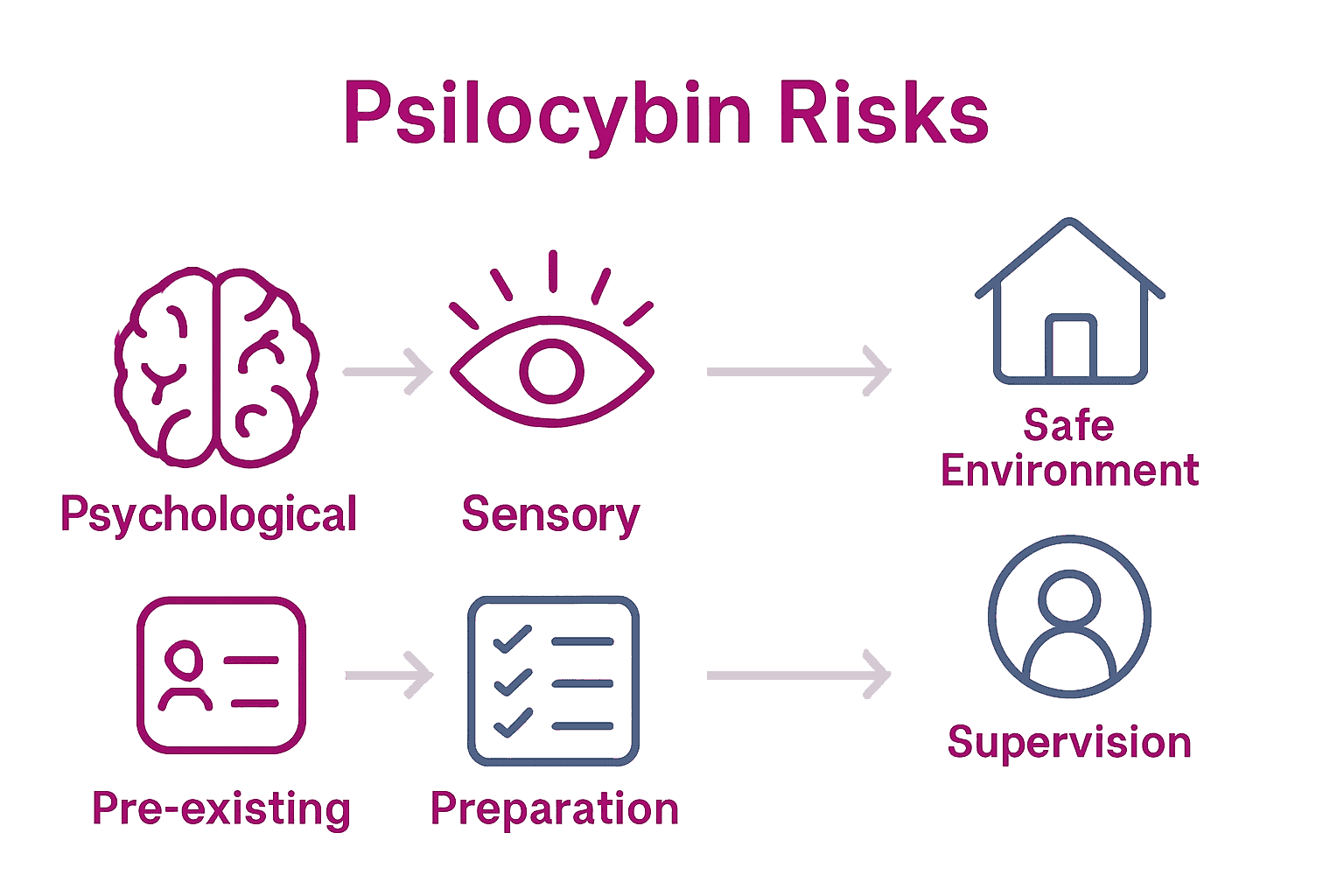
Psilocybin experiences carry inherent psychological and physiological risks that demand careful consideration and proactive management. While these substances offer potential therapeutic insights, understanding and mitigating potential adverse reactions is crucial for a safe and meaningful journey.
Key risks associated with psilocybin consumption include:
- Psychological distress or intense emotional reactions
- Temporary disruption of mental equilibrium
- Potential exacerbation of underlying mental health conditions
- Sensory overwhelm or disorientation
Research from the National Center for Biotechnology Information emphasizes that while psilocybin’s harm potential remains relatively low compared to other psychoactive substances, individualized experiences vary significantly. This variability underscores the importance of personalized risk management.
Minimizing risks requires a comprehensive approach. The Oregon Health Authority recommends trauma-informed strategies that focus on:
- Creating a safe, controlled environment
- Having a trusted, experienced guide present
- Implementing comprehensive behavioral monitoring
- Preparing mentally and physically before consumption
For individuals seeking deeper understanding of risk mitigation strategies, Understanding the Role of Psilocybin in Therapy offers additional insights into responsible and therapeutic psilocybin use.
Elevate Your Psilocybin Experience with Trusted Products
Understanding the complex shifts in perception and consciousness that psilocybin brings can be both exciting and daunting. This article highlights key challenges like navigating emotional exploration, sensory amplification, and spiritual encounters safely and effectively. To support your journey, Psychedelics Zone offers high-quality, lab-tested psilocybin products including microdoses, edibles, and capsules designed to deliver consistent and reliable effects with discreet packaging and fast delivery.
Explore our Psilocybin Archives – Psychedelics Zone to find products tailored for deep insight and transformation.
Ready to transform your experience and embrace self-discovery safely? Visit Psychedelics Zone now to shop our carefully curated selection. Dive deeper into the science behind the journey by checking out our Neuroplasticity Archives – Psychedelics Zone and empower your path to expanded consciousness today.
Frequently Asked Questions
What are the common effects of a psilocybin experience?
Common effects of a psilocybin experience include sensory amplification, perceptual distortions, emotional exploration, and spiritual encounters. Users often report heightened senses, altered perceptions, and profound introspection.
How does psilocybin interact with the brain and body?
Psilocybin interacts with serotonin receptors in the brain, leading to enhanced neural connectivity and temporary disruption of default brain networks. This interaction causes shifts in perception, emotion, and consciousness.
What safety practices should I follow when using psilocybin?
It’s essential to follow safety practices such as having a trusted, experienced guide present, creating a safe environment, and preparing mentally before consumption. Trauma-informed management strategies are also recommended to reduce potential adverse responses.
Are there any psychological risks associated with psilocybin use?
Yes, psilocybin can induce psychological risks such as distress or intense emotional reactions, disruption of mental equilibrium, and potential exacerbation of underlying mental health conditions. Understanding and managing these risks are crucial for a safe experience.