
Over 26 million adults in the United States have tried psychedelics at least once in their lives, yet many people still misunderstand what these substances actually do. While public perception often focuses on myths or dramatic stories, psychedelics influence the brain and mind in ways that science is only beginning to uncover. With research paving the way for new conversations about safety, legality, and mental health, clear knowledge about psychedelics has never been more important.
Key Takeaways
| Point | Details |
|---|---|
| Definition of Psychedelics | Psychedelics are psychoactive substances that significantly alter perception, mood, and cognitive processes, stemming from natural and synthetic sources. |
| Types and Effects | Major types include classic hallucinogens, like LSD and psilocybin, and dissociative drugs like PCP, each with unique psychological and perceptual impacts. |
| Legal Landscape | In the U.S., psychedelics are classified as Schedule I substances, but there’s an ongoing trend toward decriminalization and increasing medical research. |
| Safety and Responsible Use | Users should prioritize safety measures, including understanding mental health history and utilizing supportive environments to mitigate risks. |
Table of Contents
- Defining Psychedelics And Common Misconceptions
- Major Types Of Psychedelics And Their Effects
- How Psychedelics Influence Brain And Behavior
- Legal Status And Regulatory Framework In The U.S.
- Risks, Safety Considerations, And Responsible Use
Defining Psychedelics and Common Misconceptions
Psychedelics represent a fascinating class of substances that profoundly alter human perception and consciousness. According to the Cleveland Clinic, these compounds can dramatically transform an individual’s sensory experiences, thoughts, and emotional landscape.
At their core, psychedelics are psychoactive substances capable of inducing significant changes in perception, mood, and cognitive processes. They interact with brain chemistry to create unique sensory experiences that may include visual or auditory hallucinations – perceptual events that seem real but do not actually exist. Some psychedelics emerge from natural sources like plants and fungi, while others are synthetically produced in laboratories.
Common misconceptions about psychedelics often stem from limited understanding and historical stigmatization. Many people incorrectly assume these substances are purely recreational or inherently dangerous. In reality, emerging research suggests potential therapeutic applications for mental health conditions. For a deeper exploration of these nuanced perspectives, check out our guide on debunking magic mushroom myths.
Key characteristics of psychedelics include their ability to:
- Alter sensory perception
- Modify emotional states
- Potentially trigger profound introspective experiences
- Interact uniquely with individual brain chemistry
Understanding psychedelics requires an open mind and recognition of their complex neurological interactions.
Major Types of Psychedelics and Their Effects
Psychedelics represent a diverse class of substances with remarkable neurological impacts. According to Medical News Today, these compounds can be broadly categorized into two primary groups: classic hallucinogens and dissociative drugs, each producing unique psychological and perceptual experiences.
Classic hallucinogens like LSD, psilocybin, and mescaline primarily interact with serotonin receptors, creating profound alterations in perception, mood, and cognitive processes. As research from the Australian Drug Foundation indicates, these substances can induce intense visual and auditory hallucinations, dramatically transforming an individual’s sensory experience.
The major types of psychedelics include:
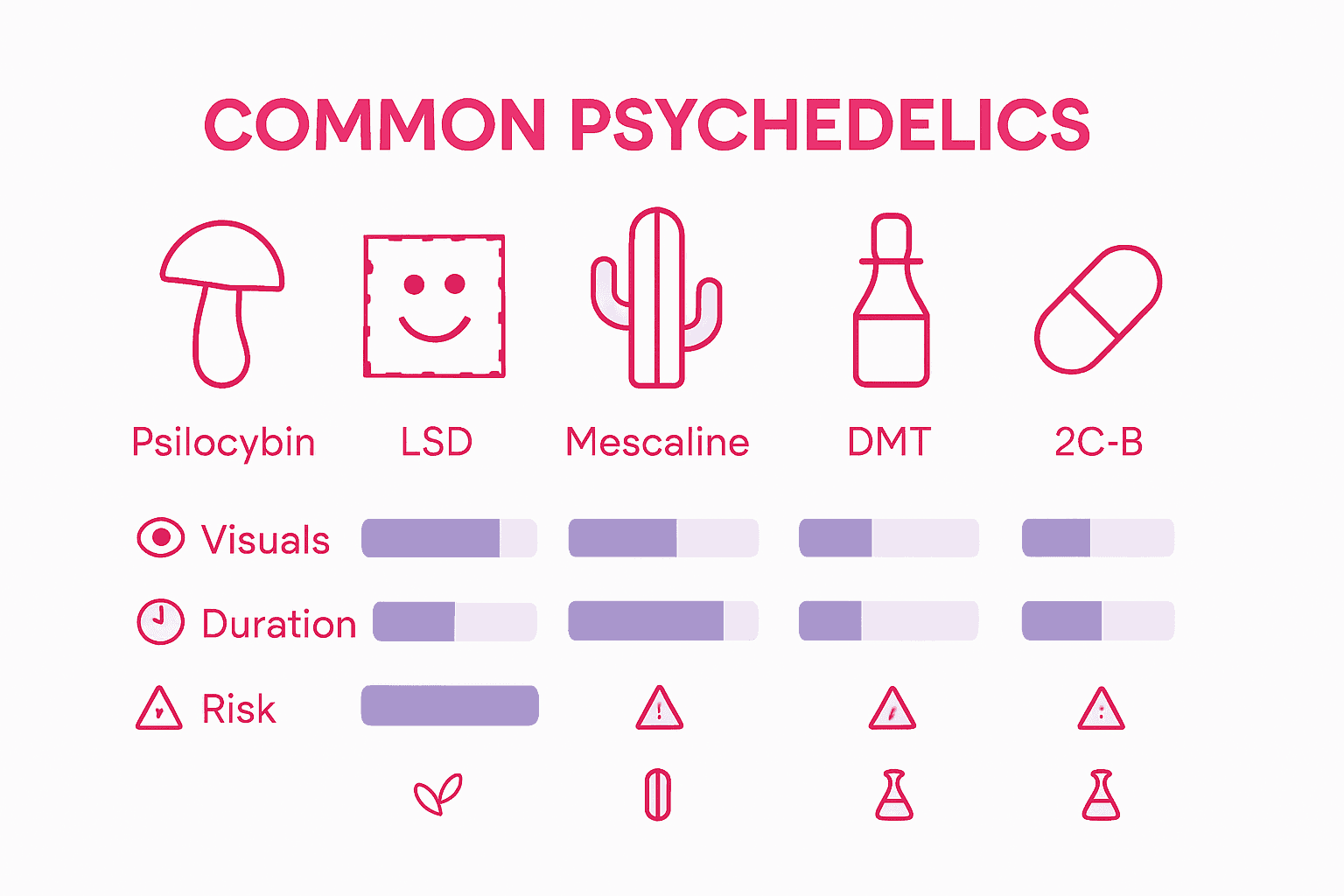
Here’s a comparison of the major types of psychedelics and their key attributes:
| Substance | Source | Main Effects | Notable Risks |
|---|---|---|---|
| LSD | Synthetic | Visual distortions Mood shifts | Anxiety Paranoia |
| Psilocybin | Mushrooms | Altered perception Introspection | Nausea Confusion |
| Mescaline | Peyote cactus | Sensory changes Euphoria | Headache Dizziness |
| DMT | Plants | Intense visuals Short duration | Rapid onset Disorientation |
| 2C-B | Synthetic | Visual/auditory shifts Stimulation | Agitation Elevated heart rate |
- LSD: A synthetic compound known for intense visual distortions
- Psilocybin: Naturally occurring in certain mushroom species
- Mescaline: Derived from the peyote cactus
- DMT: Found in various plant sources
- 2C-B: A synthetic psychedelic compound
For those interested in understanding the nuanced therapeutic potential of these substances, our guide on psilocybin in therapy offers deeper insights into their evolving medical applications. Dissociative drugs like PCP operate differently, typically causing feelings of detachment from one’s environment and self, highlighting the complex neurological mechanisms of psychedelic substances.
How Psychedelics Influence Brain and Behavior
Psychedelics interact with the brain through complex neurochemical mechanisms that fundamentally transform consciousness and perception. According to Psychology Today, these substances disrupt communication between neural networks, particularly targeting serotonin pathways and creating profound alterations in mental functioning.
Receptor interaction is the primary method by which psychedelics exert their extraordinary effects. The Psychedelic Science Research Center explains that these compounds primarily act as agonists at the 5-HT2A serotonin receptor, which triggers remarkable changes in sensory perception, mood, and cognitive processes. This receptor activation leads to the characteristic hallucinogenic experiences that define psychedelic encounters.
Key neurological impacts of psychedelics include:
- Disrupting standard communication between brain networks
- Altering serotonin pathway functionality
- Potentially triggering experiences of ego dissolution
- Creating temporary shifts in perception and consciousness
- Modifying typical neural communication patterns
For those interested in understanding the deeper therapeutic potential of these neurological interactions, our guide on PTSD treatment potential offers comprehensive insights into how these substances might revolutionize mental health treatments.
Legal Status and Regulatory Framework in the U.S.
The legal landscape surrounding psychedelics in the United States remains complex and rapidly evolving. According to Medical News Today, while these substances are generally classified as illegal at the federal level, there is growing momentum toward decriminalization and medical research across various jurisdictions.
Regulatory complexity characterizes the current approach to psychedelics. Some cities and states have begun to explore more progressive policies, creating localized frameworks that challenge traditional prohibitionist stances. This shift is primarily driven by emerging clinical research demonstrating potential therapeutic applications for mental health conditions such as depression, PTSD, and anxiety disorders.
Key legal considerations for psychedelics include:
- Federal classification as Schedule I controlled substances
- Increasing local decriminalization efforts
- Expanding clinical research permissions
- Potential medical exemptions
- Varying state-level regulatory approaches
For those seeking a deeper understanding of the nuanced legal landscape, our detailed overview of psychedelic mushroom legality provides comprehensive insights into the current regulatory environment. The legal status continues to evolve, reflecting a growing recognition of potential medical and therapeutic benefits beyond traditional regulatory frameworks.
Risks, Safety Considerations, and Responsible Use
Psychedelics demand a nuanced approach to consumption, balancing potential insights with critical safety considerations. According to Psychedelic Science, while these substances have low abuse potential, they can still produce significant adverse effects including anxiety, paranoia, and profound psychological disruption.
Responsible use emerges as the cornerstone of safe psychedelic exploration.
IMAGE:descriptive_key_1] [Psychology Today emphasizes the importance of understanding potential risks, creating a supportive environment, and recognizing individual psychological vulnerabilities before engaging with these powerful substances.
Key safety considerations include:
- Understanding personal mental health history
- Choosing a safe, controlled environment
- Having a trusted, experienced guide present
- Starting with low doses
- Preparing mentally and emotionally for the experience
For those seeking comprehensive guidance on navigating psychedelic experiences safely, our guide on enhancing psychedelic experiences offers in-depth insights into creating a supportive and transformative journey. Remember: safety, preparation, and mindful intention are paramount in exploring these profound consciousness-altering substances.
Ready to Explore the Real Potential of Psychedelics?
If you have been searching for clarity among the myths, legal uncertainties, and safety questions around psychedelics, you are not alone. Many readers want to move from curiosity to action but worry about quality, privacy, and finding trusted products. That is exactly why Psychedelics Zone exists. Our platform bridges the gap between education and informed decision-making. Discover our expert-curated Psychedelics category for a selection of lab-tested mushroom products and solutions designed to support your personal journey.

Do not let uncertainty or outdated misconceptions hold you back from real discovery. Shop our wide range of edibles, capsules, and microdose options with fast delivery and discreet packaging. Visit Psychedelics Zone now to experience secure online ordering and begin your own path toward understanding and transformation. For those interested in the specific benefits of psilocybin products, our Psilocybin section offers targeted guidance and trusted customer favorites—explore today and take control of your psychedelic experience.
Frequently Asked Questions
What are psychedelics?
Psychedelics are psychoactive substances that significantly alter perception, mood, and cognitive processes. They create unique sensory experiences, often involving visual or auditory hallucinations.
What are the major types of psychedelics and how do they differ?
The major types include classic hallucinogens like LSD, psilocybin, and mescaline, which primarily interact with serotonin receptors, and dissociative drugs like PCP, which cause feelings of detachment. Each type produces distinct psychological and perceptual effects.
What are the risks associated with psychedelics?
Psychedelics can produce adverse effects including anxiety, paranoia, and psychological disruption. Understanding personal mental health history and choosing a safe environment are crucial for minimizing risks.
How do psychedelics influence the brain?
Psychedelics interact with brain chemistry, particularly serotonin pathways, leading to disrupted communication between neural networks. This interaction can result in profound changes in perception, mood, and consciousness.