
One startling discovery has shown that a single dose of psilocybin can spark up to three times more brain connectivity changes than common stimulant medications. With mental health disorders affecting millions, the search for new therapeutic options has never felt more urgent. Research into psilocybin and neuroplasticity highlights how these unique compounds may help the brain break free from rigid thought patterns, paving the way for innovative approaches to healing and personal growth.
Key Takeaways
| Point | Details |
|---|---|
| Psilocybin’s Impact on Neuroplasticity | Psilocybin significantly enhances brain connectivity, promoting flexibility and dynamic communication between different regions, which can support healing. |
| Therapeutic Potential | Psilocybin shows promise in treating mental health issues like depression, anxiety, and PTSD by enabling psychological resets and emotional recalibrations. |
| Safety and Legal Considerations | The legal status of psilocybin is complex, classified as a Schedule I substance under federal law, necessitating careful navigation of safety protocols in clinical settings. |
| Long-term Effects | Evidence indicates that the neuroplastic changes induced by psilocybin can persist for weeks, suggesting lasting benefits beyond the immediate experience. |
Table of Contents
- Defining Psilocybin And Neuroplasticity
- How Psilocybin Influences Brain Connectivity
- Scientific Research On Neuroplasticity Effects
- Therapeutic Uses And Real-World Applications
- Risks, Safety, And Legal Considerations
Defining Psilocybin and Neuroplasticity
Psilocybin is a naturally occurring psychedelic compound found in certain mushroom species, capable of profoundly transforming brain connectivity and function. According to recent neuroscience research, a single high dose can induce remarkable neurobiological changes that extend far beyond the immediate psychedelic experience.
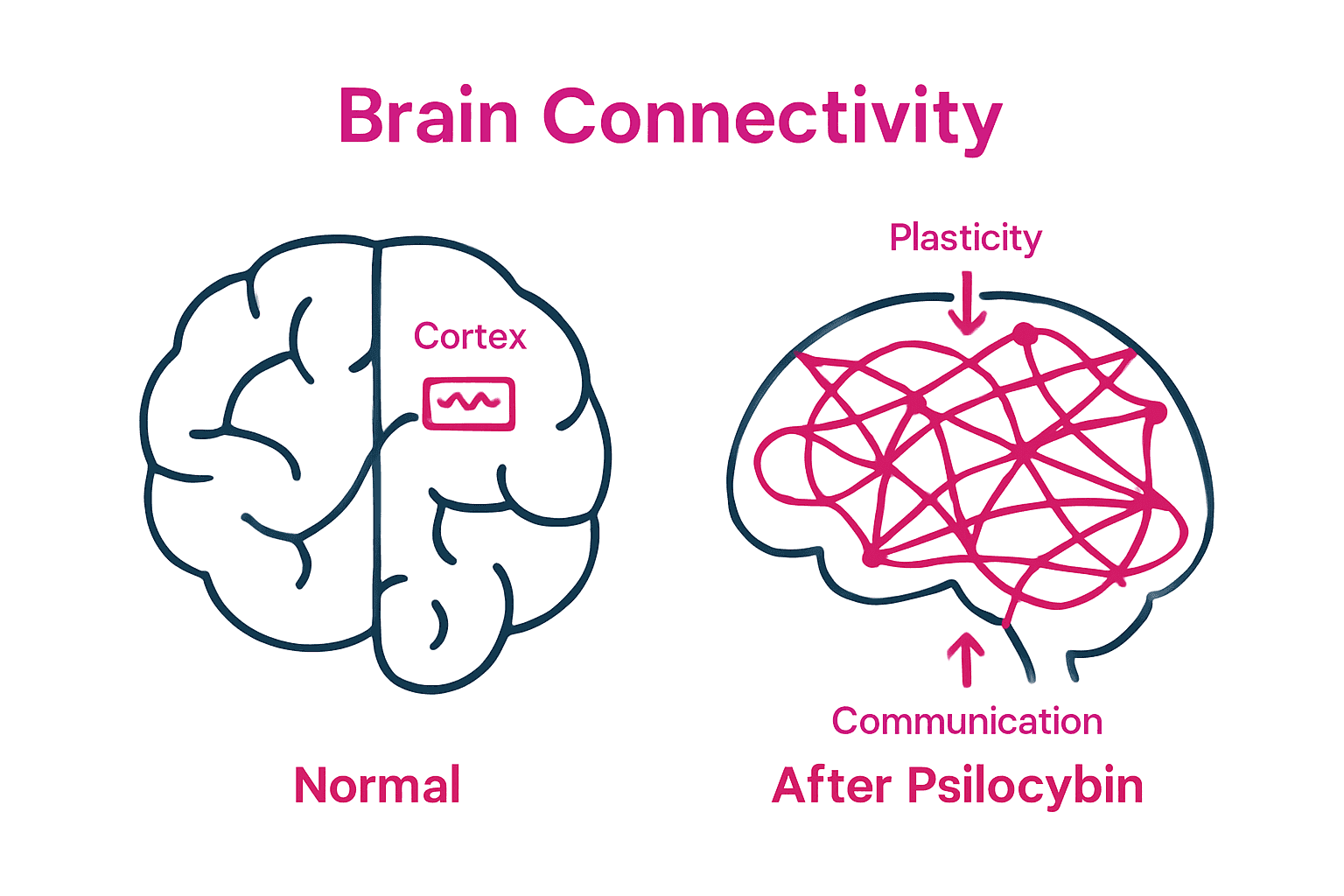
Neuroplasticity represents the brain’s extraordinary ability to reorganize itself by forming new neural connections throughout life. When psilocybin enters the system, it triggers a cascade of neurological adaptations. Research indicates that psilocybin’s active metabolite psilocin dramatically alters brain network integrity, reducing default mode network cohesion while simultaneously increasing inter-network connectivity. This process essentially allows different brain regions to communicate more flexibly and dynamically.
The neuroplastic effects of psilocybin are particularly fascinating in how they manifest. In animal models, researchers have observed direct neuroplastic changes in critical brain regions like the cortex and hippocampus – areas responsible for learning, memory, and emotional processing. These changes aren’t just temporary shifts but can represent persistent neurobiological reconfigurations that potentially support psychological healing and personal transformation.

By disrupting rigid cognitive patterns, psilocybin appears to create a unique neurological “reset” mechanism. Read more about the comprehensive benefits of magic mushrooms to understand how these remarkable compounds might support mental wellness through their profound neuroplastic capabilities.
How Psilocybin Influences Brain Connectivity
Brain connectivity undergoes a profound transformation when exposed to psilocybin, creating a neurological landscape that challenges traditional understanding of cognitive processing. According to NIH research, psilocybin causes functional connectivity changes three times more significant than stimulant medications like methylphenidate, particularly impacting the brain’s default mode network – the region associated with our sense of self.
The neurological shifts are most dramatic in key brain regions. Longitudinal functional MRI studies reveal that psilocybin systematically disrupts connectivity across multiple networks, with special emphasis on desynchronizing the default mode network. This desynchronization connects directly to the anterior hippocampus, a critical area for memory and emotional processing. Intriguingly, these reduced network synchronizations can persist for weeks after a single dose, suggesting long-term neurological recalibration.
Psilocybin’s impact extends across multiple brain regions, including the cortex, thalamus, hippocampus, and cerebellum. By temporarily dissolving rigid neural pathways, it creates a unique opportunity for the brain to form novel connections and break entrenched cognitive patterns. This process is akin to a neurological “reset” button, allowing for potentially transformative psychological experiences and perspectives.
Explore the different methods of consuming psilocybin mushrooms to understand how various intake methods might influence these remarkable brain connectivity changes. The potential for personal growth and mental wellness through these neurological shifts is profound and continues to fascinate researchers worldwide.
Scientific Research on Neuroplasticity Effects
Neuroplasticity research on psilocybin reveals groundbreaking insights into how psychedelic compounds can fundamentally reshape brain architecture. A comprehensive Nature study demonstrates that psilocybin induces both acute and long-lasting functional connectivity changes, with effects persisting up to three weeks after a single dose. This research provides compelling cross-species evidence by examining neuroplastic effects in both human and animal models.
Functional MRI data unveil a fascinating dose-dependent relationship between psilocin levels and brain network modifications. According to research, increased psilocin concentrations directly correlate with reductions in network integrity and segregation. This means that as psilocybin dosage increases, the brain’s traditional network boundaries become more fluid, allowing for unprecedented neural communication and potential rewiring of entrenched cognitive patterns.
The structural neuroplasticity induced by psilocybin is particularly remarkable in the cortex and hippocampus – brain regions critical for learning, memory, and emotional processing. Animal models have shown that these neuroplastic changes aren’t merely temporary fluctuations but represent significant structural reorganization. By temporarily disrupting established neural pathways, psilocybin creates a unique window of neurological flexibility that could potentially support psychological healing and personal transformation.
Here’s a summary of how psilocybin-induced neuroplasticity impacts different brain regions:
| Brain Region | Role in Brain Function | Observed Psilocybin Effects |
|---|---|---|
| Cortex | Learning Decision making | Increased plasticity Rewiring |
| Hippocampus | Memory Emotional processing | Enhanced connectivity Structural changes |
| Thalamus | Sensory relay Alertness | Altered network dynamics |
| Cerebellum | Coordination Cognitive processes | Novel pathway formation |
Learn more about the comprehensive benefits of magic mushrooms to understand how these neuroplastic mechanisms might translate into tangible improvements in mental wellness and cognitive flexibility. The ongoing research continues to unlock the profound potential of psilocybin in reshaping our understanding of brain plasticity.
Therapeutic Uses and Real-World Applications
Neuroplasticity induced by psilocybin opens remarkable therapeutic pathways for addressing complex mental health challenges. The compound’s unique ability to restructure neural networks presents potential treatments for conditions traditionally resistant to conventional interventions. From depression and anxiety to addiction and PTSD, psilocybin demonstrates promising capabilities in helping individuals break through entrenched psychological patterns.
The real-world applications extend beyond traditional psychiatric treatment. Mental wellness professionals are exploring psilocybin’s potential in addressing chronic conditions like treatment-resistant depression, where conventional medications often fall short. By temporarily disrupting rigid cognitive circuits, psilocybin creates a neurological environment conducive to psychological reset and emotional recalibration. Individuals report breakthrough experiences that provide fresh perspectives, reduced rumination, and enhanced emotional flexibility.
Specific therapeutic contexts show particularly intriguing results. End-of-life psychological support, addiction recovery, and trauma processing are emerging domains where psilocybin’s neuroplastic effects demonstrate significant promise. The compound appears to help individuals confront deep-seated emotional blocks, facilitating healing processes that traditional talk therapy might take years to achieve. These transformative experiences often involve profound insights, emotional releases, and fundamental shifts in personal narrative and self-perception.
Explore how psychedelics can potentially help in treating PTSD to understand the cutting-edge research in psychological healing. As scientific understanding deepens, psilocybin moves from the margins of alternative medicine toward mainstream therapeutic consideration, offering hope for millions struggling with complex mental health challenges.
Risks, Safety, and Legal Considerations
Legal landscape surrounding psilocybin remains complex and rapidly evolving. According to current legal research, while states like Oregon and Colorado have initiated supervised therapeutic use frameworks, psilocybin remains classified as a Schedule I drug under federal law. This creates a nuanced legal environment where potential therapeutic applications continue to clash with national drug classification standards.
Safety considerations are paramount when exploring psilocybin’s potential. Psychological risks can include intense anxiety, challenging emotional experiences, and potential exacerbation of underlying mental health conditions. The American Brain Foundation emphasizes the critical importance of controlled, clinical settings to mitigate adverse effects. Unsupervised or recreational use significantly increases potential psychological vulnerabilities, making professional guidance essential for anyone considering psilocybin exploration.
Risk mitigation strategies are crucial for responsible use. Potential users should consider comprehensive screening for pre-existing mental health conditions, understand potential interaction with existing medications, and only consider use under professional supervision. Factors like personal mental health history, current psychological state, and environmental setting can dramatically influence the safety and potential therapeutic outcomes of psilocybin experiences.
Learn about the legality of psychedelic mushrooms to navigate the complex legal and safety considerations surrounding these compounds. As research continues to advance, understanding the nuanced legal and safety landscape becomes increasingly important for those interested in exploring psilocybin’s potential therapeutic applications.
Ready to Experience Real Neuroplastic Change?
If you are fascinated by how psilocybin unlocks true brain flexibility and encourages new neural connections, you are not alone. Many readers want convenient and trustworthy ways to explore psilocybin’s transformative effects safely and confidently. Traditional obstacles, like quality concerns or complicated sourcing, often create doubt or delay your path to personal growth and cognitive renewal. At Psychedelics Zone, we have built our entire platform around supporting your journey toward mental clarity and deeper self-understanding with safe access and reliable products. For general questions or further learning, explore our General Archives.

Start your path to enhanced brain plasticity, emotional wellness, and creative breakthroughs today. Browse our curated selection of premium, lab-tested mushroom products for microdosing, edibles, and more. Enjoy discreet shipping and fast local delivery, making it easier than ever to take the next step. Visit https://psychedelicszone.com now and elevate your mind—discover the science-backed difference you have been searching for.
Frequently Asked Questions
What is psilocybin and how does it affect neuroplasticity?
Psilocybin is a naturally occurring psychedelic compound found in certain mushrooms. It affects neuroplasticity by inducing significant changes in brain connectivity and function, allowing different brain regions to communicate more flexibly, which can lead to potential therapeutic benefits.
How does psilocybin influence brain connectivity?
Psilocybin alters brain connectivity by disrupting the default mode network, which is responsible for our sense of self, and increases inter-network connectivity. This desynchronization allows for enhanced communication between different brain areas, which can facilitate new cognitive patterns and perspectives.
What are the therapeutic applications of psilocybin’s neuroplastic effects?
Psilocybin shows potential for treating complex mental health issues such as depression, anxiety, PTSD, and addiction by helping individuals break free from entrenched psychological patterns and promoting emotional flexibility and healing.
What are the risks associated with using psilocybin?
The primary risks of using psilocybin include potential psychological effects such as anxiety and intensified emotional experiences. It is critical to use psilocybin in a controlled, clinical setting and to consider screening for pre-existing mental health conditions to mitigate potential adverse effects.